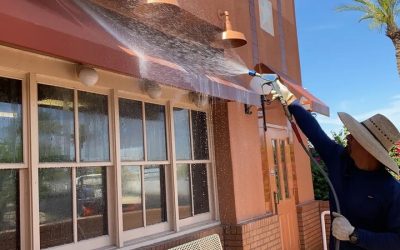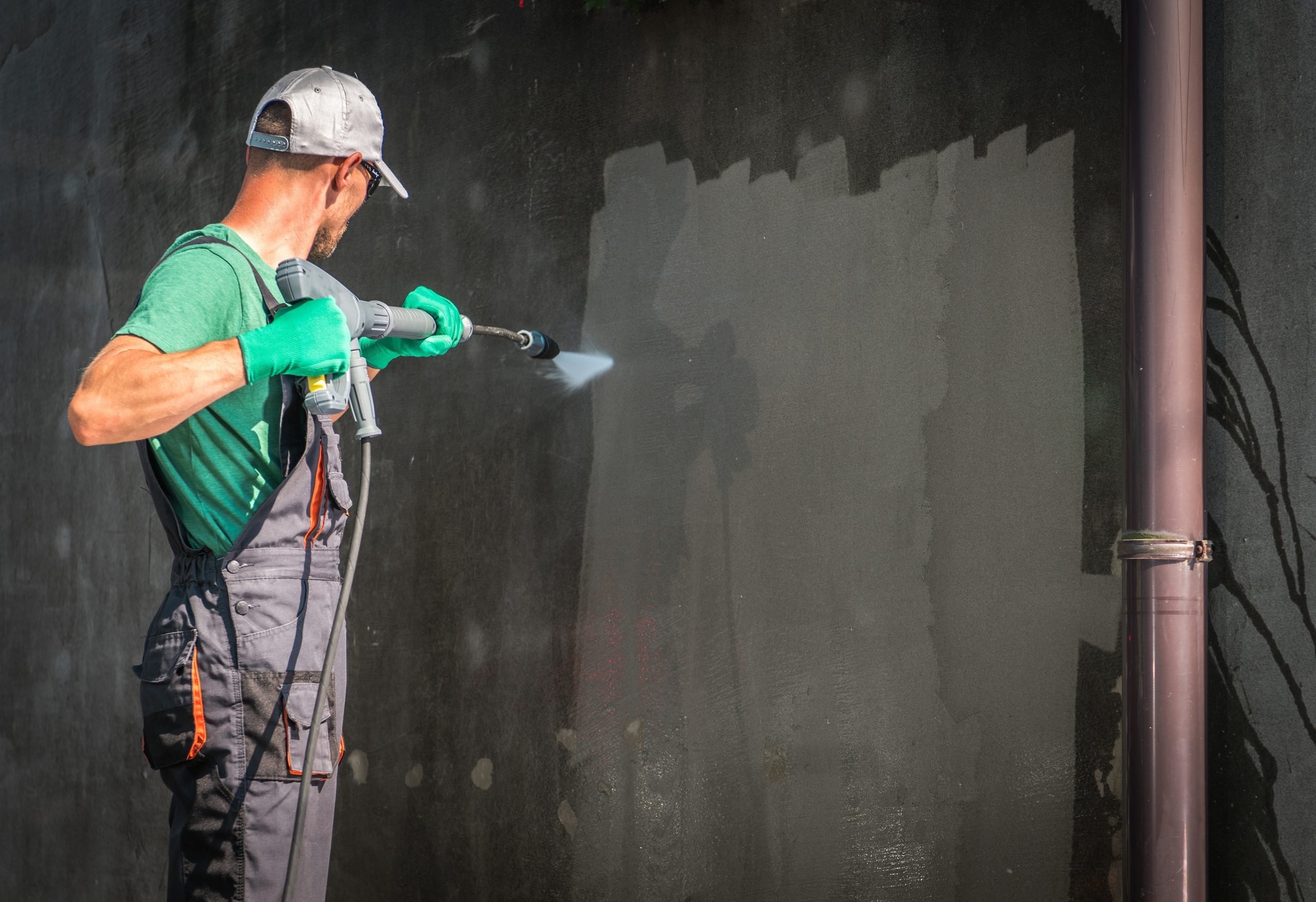
Textured concrete changes the pressure washing process because dirt, dust, and residue can settle into grooves, patterns, and uneven surface areas that are harder to clean than flat concrete. The cleaning method also needs to account for the finish itself, since excessive pressure or poor technique can affect decorative surfaces differently than standard concrete.
For Phoenix, AZ properties, this distinction matters because textured concrete is commonly used for patios, walkways, pool decks, entry areas, and other outdoor spaces where both appearance and surface condition matter.
Why Does Textured Concrete Hold More Dirt?
Flat concrete presents a relatively uniform surface. Textured concrete, on the other hand, contains raised sections, recessed lines, stamped patterns, or rough finishes that create more places for debris to collect.
Dust may settle into shallow grooves. Mud can dry inside patterned areas. Organic debris can gather along edges or low points.
Over time, these deposits may become more noticeable because the surface is not being soiled evenly.
This can make routine rinsing less effective, especially when dirt is lodged below the highest points of the pattern.
What Types of Textured Concrete Are Common Around Homes?
Textured concrete can take several forms.
Some common examples include:
- Stamped concrete
- Broom-finished concrete
- Decorative concrete
- Patterned patios
- Textured pool decks
- Concrete with scored or grooved sections
- Surfaces designed to improve traction
Each finish has its own profile and durability.
A broom-finished driveway, for example, may tolerate a different cleaning approach than a decorative stamped patio with a coating or sealer.
This is why pressure washing services should be adjusted to the specific surface rather than applied identically across every concrete area.
Why Doesn’t More Pressure Always Mean Better Cleaning?
It is easy to assume that stubborn dirt requires stronger water pressure, but that is not always the best approach.
Too much pressure can affect certain decorative finishes or create uneven cleaning patterns. If the wand is held too close or moved inconsistently, it may leave visible lines or areas that look lighter than the surrounding concrete.
The goal of professional pressure washing is not simply to use the strongest possible setting. It is to use enough pressure and the appropriate technique to remove buildup while respecting the condition of the surface.
This is especially important when decorative coatings, sealers, or older concrete are involved.
How Do Grooves and Patterns Affect Cleaning Technique?
Textured concrete requires attention to direction and coverage.
Water may move easily across raised portions while leaving dirt trapped in recessed areas. Cleaning only from one angle can sometimes miss debris that has settled into grooves.
A controlled approach allows the cleaner to work across the surface more evenly and address low points without repeatedly concentrating pressure on the same area.
In some cases, cleaning solutions may also be used to help loosen buildup before rinsing.
Professional power washing services typically consider both the surface profile and the type of contamination present.
How Does Phoenix Dust Affect Textured Concrete?
Phoenix properties are regularly exposed to airborne dust.
On smooth concrete, dry dust may remain mostly on the surface until it is swept or rinsed away. On textured concrete, particles can settle into small channels and depressions.
If moisture is introduced through rain, irrigation, pool splash, or cleaning, that dust can turn into a thin layer of residue that dries inside the surface pattern.
Repeated cycles can make these low areas appear darker than the surrounding concrete.
This is one reason textured patios and walkways may look unevenly dirty even when the overall amount of buildup is not severe.
Are Pool Decks Different From Other Textured Concrete?
Yes. Pool decks have additional considerations because they are exposed to repeated moisture, foot traffic, sunscreen, and water splash.
Textured pool surfaces are often designed to provide more traction, which means they naturally contain a rougher profile.
That texture can also trap residue more easily.
Cleaning around a pool therefore requires attention to both the concrete finish and nearby features. Water direction, drainage, surrounding landscaping, and the condition of any coating should all be considered before work begins.
Can Power Washing Affect Decorative Sealers?
It can, depending on the surface condition and the method used.
Some textured concrete has been sealed to enhance color, protect the finish, or change its appearance. If that coating is already worn or deteriorating, aggressive cleaning may expose inconsistent areas.
Before power washing, it is helpful to determine whether the concrete has a sealer or decorative coating and whether it is still in good condition.
Homeowners planning to reseal a surface may also need to coordinate cleaning with the contractor responsible for the new coating.
Why Do Older Textured Surfaces Need More Care?
Age can change how concrete responds to cleaning.
Older surfaces may have cracks, worn decorative areas, fading, previous repairs, or sections where a coating has begun to break down.
These conditions do not necessarily prevent cleaning, but they should influence the approach.
A professional cleaner can evaluate the area before starting and avoid treating a weathered surface the same way as newer, uncoated concrete.
This is particularly relevant for residential pressure washing services, where multiple surface ages and finishes may exist around the same property.
For Phoenix homeowners who need help cleaning textured patios, walkways, pool decks, or other concrete areas, learning more about professional residential pressure washing services can help clarify what type of approach may be appropriate.
What Should Homeowners Look for Before Scheduling Service?
Before cleaning, homeowners should identify any visible cracks, loose coatings, worn sealers, or repaired areas.
They should also consider what caused the buildup. Ordinary dust, grease, organic material, and staining may require different treatment.
Knowing whether the surface has been sealed or coated can also help determine the most appropriate method.
Textured concrete may be durable, but its pattern and finish make it different from a simple flat slab.
A careful pressure washing approach accounts for those differences, helping remove dirt from both raised and recessed areas while reducing the chance of unnecessary surface damage.