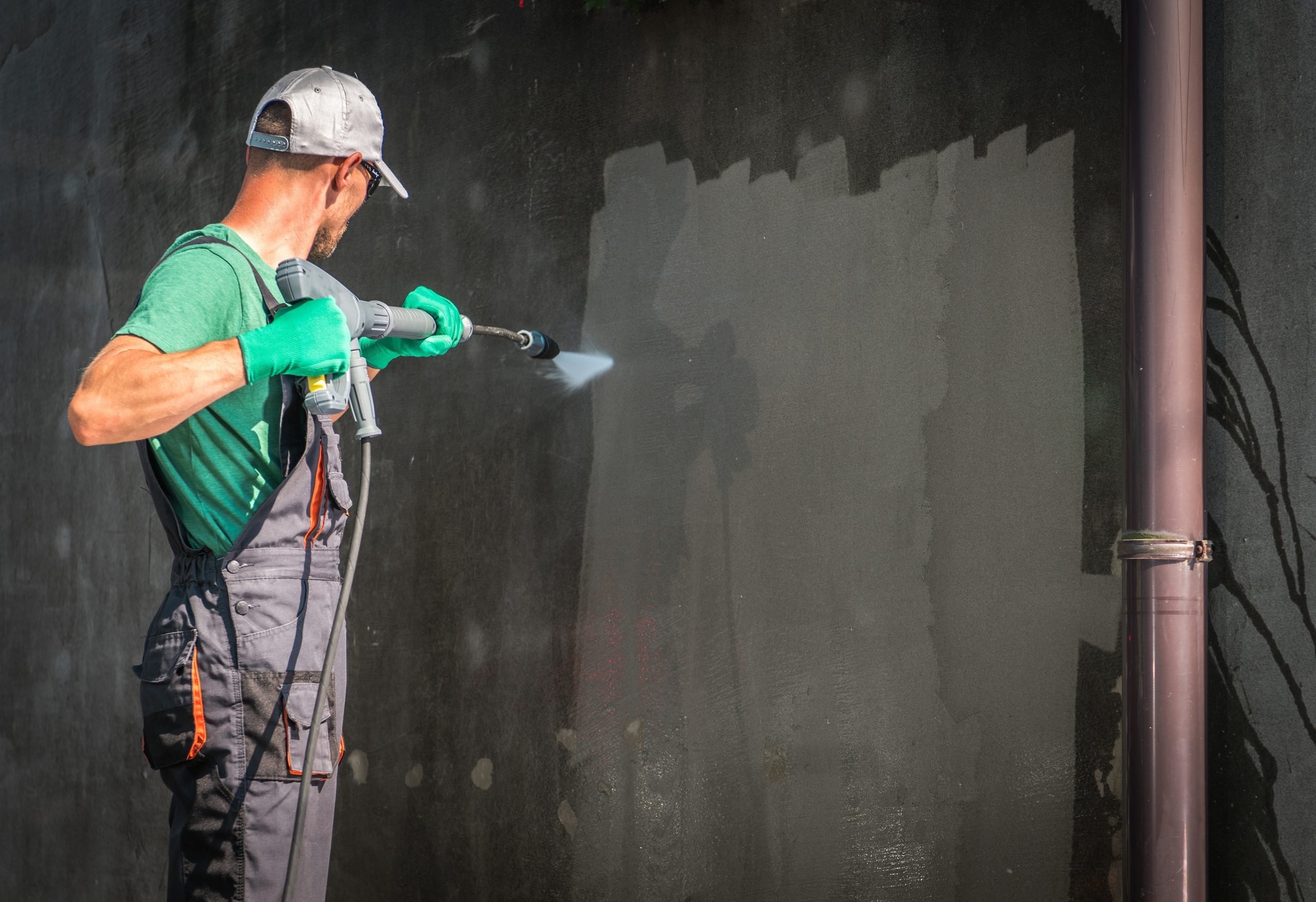
Pressure washing cleans concrete edges by lifting compacted dust, soil, and residue from the textured surface with controlled water pressure. When decorative gravel borders the concrete, the cleaning method must also prevent loose stones from being scattered across walkways, patios, or surrounding landscaping.
Why Does Dust Collect Where Concrete Meets Gravel?
Concrete edges beside decorative gravel often collect more visible buildup than open sections of a driveway, patio, or walkway. Wind moves fine desert dust across the property, while small gaps between the concrete and gravel create places where particles can settle.
Foot traffic can also move dirt and loose stones onto the concrete. When people cross from a gravel area to a paved surface, their shoes may carry dust, sand, and small fragments over the border.
Rain and irrigation runoff can make the buildup more noticeable. Water may carry fine soil from the gravel bed onto the concrete before drying and leaving a darker line along the edge. Repeated wetting and drying can cause this material to become more difficult to remove with sweeping alone.
Why Can Sweeping Leave a Dirty Border Behind?
Sweeping is useful for removing loose gravel, leaves, and surface dust. However, concrete is naturally textured, so fine particles can settle into small pores and low spots.
A broom may move the loose debris while leaving an uneven gray or brown line behind. This is especially common when dust has mixed with water, food residue, plant material, or soil from nearby landscaping.
Sweeping too aggressively may also push gravel farther onto the concrete. Small stones can become trapped near expansion joints, cracks, curbing, or the edges of decorative paving.
Pressure washing services address the attached residue after loose material has been cleared. The goal is not simply to move debris from one area to another but to clean the concrete surface more evenly.
How Should Loose Gravel Be Handled Before Power Washing?
Loose stones should be moved away from the immediate cleaning area before strong water pressure is applied. This reduces the risk of gravel being pushed across the concrete or into nearby doors, windows, turf, and landscaping.
The edge should first be inspected to determine whether the gravel is contained by curbing, edging, or another landscape border. Areas without a firm divider may require additional control because the stones can shift more easily.
Larger debris can be removed manually or with carefully directed airflow. Once the border is clear enough to access, the concrete can be cleaned using a method suited to its condition.
A professional power washing company may work in smaller sections near gravel rather than cleaning the entire surface with the same movement and pressure.
Why Does Water Direction Matter Near Decorative Rock?
Water direction determines where loosened dirt, runoff, and small stones will travel. Spraying directly toward a gravel bed may drive dirty water into the rocks, while spraying outward without planning may scatter gravel across the cleaned concrete.
A controlled approach directs runoff toward an appropriate open area whenever the property layout allows it. The operator must also consider nearby doors, garage openings, walls, planters, drains, and artificial turf.
The cleaning angle matters as much as the water pressure. A low, uncontrolled angle can push stones horizontally, while excessive force may disturb the landscape border.
Careful power washing focuses on lifting residue from the concrete without treating decorative gravel as part of the washable surface.
Can Every Concrete Edge Use the Same Pressure?
Not every concrete area should automatically receive the same pressure. Surface age, visible wear, existing cracks, coatings, stains, and nearby materials can affect the cleaning method.
A newer driveway may respond differently from an older patio with worn edges. Decorative or coated concrete may also need a more cautious approach than unfinished concrete.
Residential pressure washing services should begin with a visual assessment. This helps determine whether the edge needs lower pressure, a different angle, more preparation, or repeated controlled passes.
Higher pressure does not always create a better result. Effective exterior cleaning depends on matching the method to the surface and the type of buildup.
What Areas Need Extra Attention Around Gravel Borders?
Corners often need more detailed cleaning because wind pushes dust and leaves into confined spaces. Concrete beside block walls, gates, planters, and narrow side yards may also collect heavier buildup.
Expansion joints can trap small stones and soil. If these areas are ignored, the main concrete surface may look cleaner while dark lines remain around the perimeter.
Transitions between driveways and gravel landscaping are another common problem area. Tire movement, foot traffic, and runoff may repeatedly bring dust back onto the same section.
Cleaning these areas carefully helps produce a more consistent appearance across the entire paved surface.
How Can Homeowners Reduce Buildup After Cleaning?
Regular sweeping can remove loose material before it becomes compacted. Homeowners can also return displaced stones to the gravel bed instead of allowing them to remain along concrete borders.
Checking irrigation direction may help reduce repeated runoff across the same edge. Water that regularly crosses a gravel area can transport dust and soil onto the pavement.
Landscape edging should also be inspected periodically. A damaged or missing border can allow decorative stones to migrate onto sidewalks and patios more frequently.
These maintenance steps will not prevent all outdoor buildup, particularly in Phoenix’s dusty conditions, but they can make routine care more manageable.
When Are Professional Pressure Washing Services Helpful?
Professional service may be useful when sweeping and ordinary rinsing leave visible border stains, when gravel is spread throughout the cleaning area, or when multiple surfaces meet in a confined space.
Homeowners researching pressure washing in Phoenix can review how The Super Clean Bros handles residential exterior surfaces. They can assess the concrete, nearby decorative gravel, and property layout before choosing an appropriate cleaning method.
A careful process helps remove attached dust while limiting unnecessary disruption to the surrounding landscape.