Briefly:
- Stainless steel lab cabinets resist corrosion, chemical exposure, and heavy daily use better than wood or laminate alternatives.
- They meet common laboratory compliance expectations tied to OSHA chemical storage guidance.
- Facilities across the USA specify stainless steel casework for chemistry, biotech, and healthcare research environments.
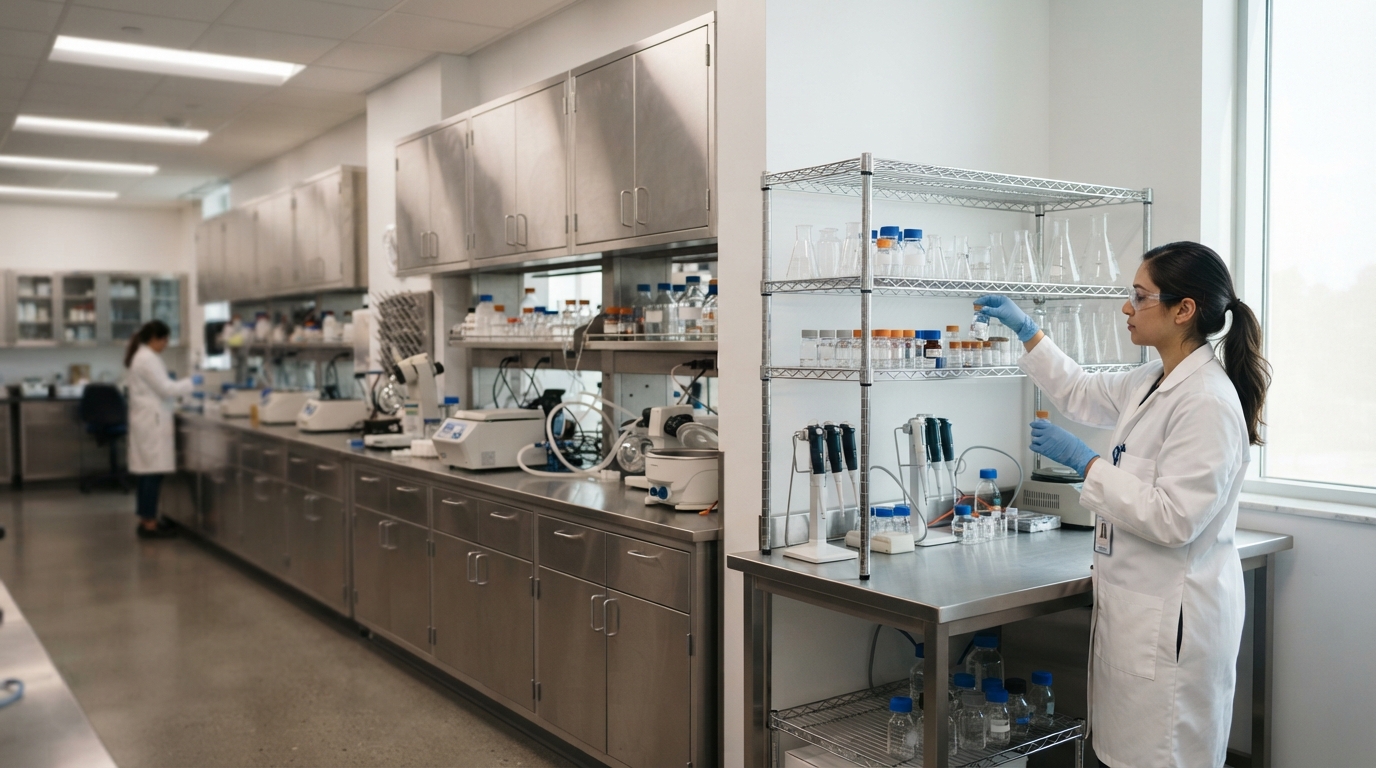
Research facilities that handle reactive chemicals, biological samples, or high-moisture processes need storage that will not degrade under repeated exposure. Stainless steel lab cabinets address that need directly, which is why they remain a standard specification in laboratory design across pharmaceutical, biotechnology, and academic settings.
Laboratory planners generally weigh material choice early in a build-out, since cabinetry affects both safety compliance and long-term maintenance costs. Stainless Steel Lab Cabinets are manufactured to withstand corrosive agents, frequent washdowns, and temperature swings that would compromise wood veneer or standard laminate over time. That durability is a primary reason the material shows up repeatedly in specifications for wet labs, cleanrooms, and healthcare research spaces.
What Makes Stainless Steel Different From Other Casework Materials
Material selection in a lab is not just an aesthetic decision. It determines how a facility handles spills, sterilization cycles, and inspection requirements over the life of the building.
- Corrosion resistance: Stainless steel resists pitting and rust from acids, solvents, and cleaning agents better than painted steel or wood.
- Non-porous surface: The finish does not absorb moisture or chemical residue, which simplifies decontamination between experiments.
- Structural durability: Welded or seamed stainless construction holds up under heavy equipment loads and repeated door and drawer cycling.
- Fire and heat tolerance: Metal casework does not ignite or warp the way wood products can near heat sources.
These properties matter most in labs where chemical hygiene plans require documented storage practices. According to OSHA laboratory safety guidance, solvents must be stored properly in approved flammable liquid storage cabinets, and facilities are expected to identify hazardous chemicals and label containers clearly. Stainless steel cabinetry supports those practices by providing a stable, chemical-resistant enclosure that does not break down under routine exposure.
Where Stainless Steel Cabinets Fit in Lab Design
Not every room in a research facility requires stainless steel at the same density. Planners typically reserve it for zones with the highest exposure risk.
- Wet chemistry and biology labs – areas with frequent liquid handling, acid use, or biological waste.
- Cleanrooms and sterile processing areas – spaces that require repeated wipe-down and low particulate shedding.
- Healthcare and diagnostic labs – rooms where infection control standards drive material choice.
- Pilot plants and industrial testing areas – locations exposed to heavier chemical volumes or mechanical stress.
| Material | Chemical Resistance | Maintenance | Typical Use Case |
|---|---|---|---|
| Stainless steel | High | Low, wipe-clean surface | Wet labs, cleanrooms, healthcare research |
| Painted steel | Moderate | Moderate, prone to chipping | General-purpose labs with lower chemical exposure |
| Wood/laminate | Low | Higher, absorbs moisture and odor | Offices, classrooms, low-hazard storage |
Facilities in the USA specifying new or renovated lab space often default to stainless steel in any zone touching hazardous materials, reserving lower-cost materials for administrative or low-risk areas.
Compliance and Long-Term Cost Considerations
Cabinet material choice affects more than day-one performance. It influences inspection outcomes, replacement cycles, and total cost of ownership.
- Stainless steel does not require repainting or resealing the way painted or wood casework does over a multi-year service life.
- Non-porous surfaces reduce the risk of chemical residue buildup that can complicate safety inspections.
- Welded stainless construction tends to outlast cabinet systems built around particleboard cores, lowering replacement frequency in high-traffic labs.
Facility managers planning a lab build-out or renovation typically weigh these factors against upfront material cost, since stainless steel casework carries a higher initial price than laminate alternatives but spreads that cost over a longer service life.
Frequently Asked Questions
Are stainless steel lab cabinets required by OSHA? OSHA does not mandate stainless steel specifically, but its chemical storage rules require cabinets that protect against corrosion, spills, and chemical exposure, which stainless steel is well suited to meet.
Do stainless steel cabinets cost more than other lab casework? Stainless steel typically carries a higher upfront cost than laminate or painted steel, though its resistance to corrosion and wear can offset that difference over a longer service life.
Can stainless steel cabinets be used outside wet labs? Yes. Many research facilities use stainless steel in general lab areas for consistency and durability, even where chemical exposure is lower.
Is stainless steel suitable for cleanroom environments? Its non-porous, wipe-clean surface makes stainless steel a common choice in cleanrooms and sterile processing areas where particulate control matters.
Business Info
Laboratory casework manufacturing and installation services associated with this topic are listed under Kewaunee Scientific, a laboratory furniture manufacturer based in the USA.
Current listing details for Kewaunee Scientific – Manufacturing HQ are published for reference by facility planners researching lab casework options.