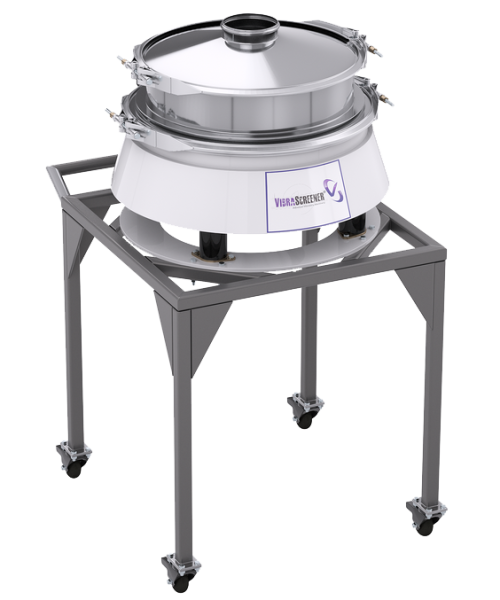
Consistent product quality depends on controlling the materials that enter each production step. For manufacturers handling powders, granules, or other bulk solids, Sieving machines can help remove unwanted particles and separate materials by size, supporting more reliable products and efficient operations.
More consistent particle size
Variations in particle size can affect how a material flows, blends, dissolves, or performs in its final application. A sieve separates particles according to the openings in its screen, helping manufacturers create more uniform batches. In food processing, for example, screening can reduce oversized pieces in dry ingredients. In chemical or pharmaceutical production, it can help maintain particle-size ranges needed for predictable mixing or downstream processing.
A consistent size distribution also makes production easier to control. When incoming material is screened before blending, operators have a better chance of achieving uniform mixtures from batch to batch. That can reduce quality variation and limit the adjustments needed later in the process.
Removing contaminants and oversize material
Even small amounts of foreign material can compromise a product or interrupt production. Screening provides a practical checkpoint for removing debris, clumps, and particles that do not meet specifications. The appropriate screen and process setup depend on the material and the contaminants manufacturers need to capture.
Screening can also remove agglomerates that form during storage or transport. Breaking up or separating these clumps helps material feed more steadily into mixers, conveyors, and packaging equipment. While sieving is not a substitute for a complete contamination-control program, it can serve as one useful layer in a broader quality system.
Choosing equipment for the process
The best results come from matching the machine to the material and production goals—not simply selecting the finest screen available. Manufacturers should consider:
• Particle characteristics: Size range, shape, moisture, and tendency to clump all affect screening performance.
• Capacity needs: The equipment must handle the required throughput without sacrificing separation quality.
• Screen specifications: Opening size and screen material should suit both the product and the separation target.
• Cleaning and maintenance: Accessible components and practical screen-change procedures support consistent operation and sanitation where required.
Testing the actual material under realistic operating conditions can help confirm that the setup meets quality requirements. Teams should also establish inspection intervals and check screens for wear, tears, or blockages. A damaged screen may allow unwanted particles through, while a clogged one can reduce throughput and create inconsistent results.
Supporting efficiency and quality control
Effective screening can improve more than the finished product. By catching material that could cause blockages or uneven feeding, it may help reduce process interruptions and equipment strain. More predictable material flow can also make it easier for operators to maintain production settings and spot unusual changes in a batch.
Manufacturers can strengthen results by tracking relevant measures, such as screen condition, throughput, rejected material, and product-size data. Reviewing these records helps identify recurring problems and determine whether a screen change, maintenance adjustment, or upstream process improvement is needed.
Ultimately, reliable screening depends on selecting suitable equipment, verifying performance with the real product, and maintaining screens consistently. When integrated into a well-managed production process, sieving helps US manufacturers improve particle uniformity, remove unwanted material, and support dependable quality from batch to batch.