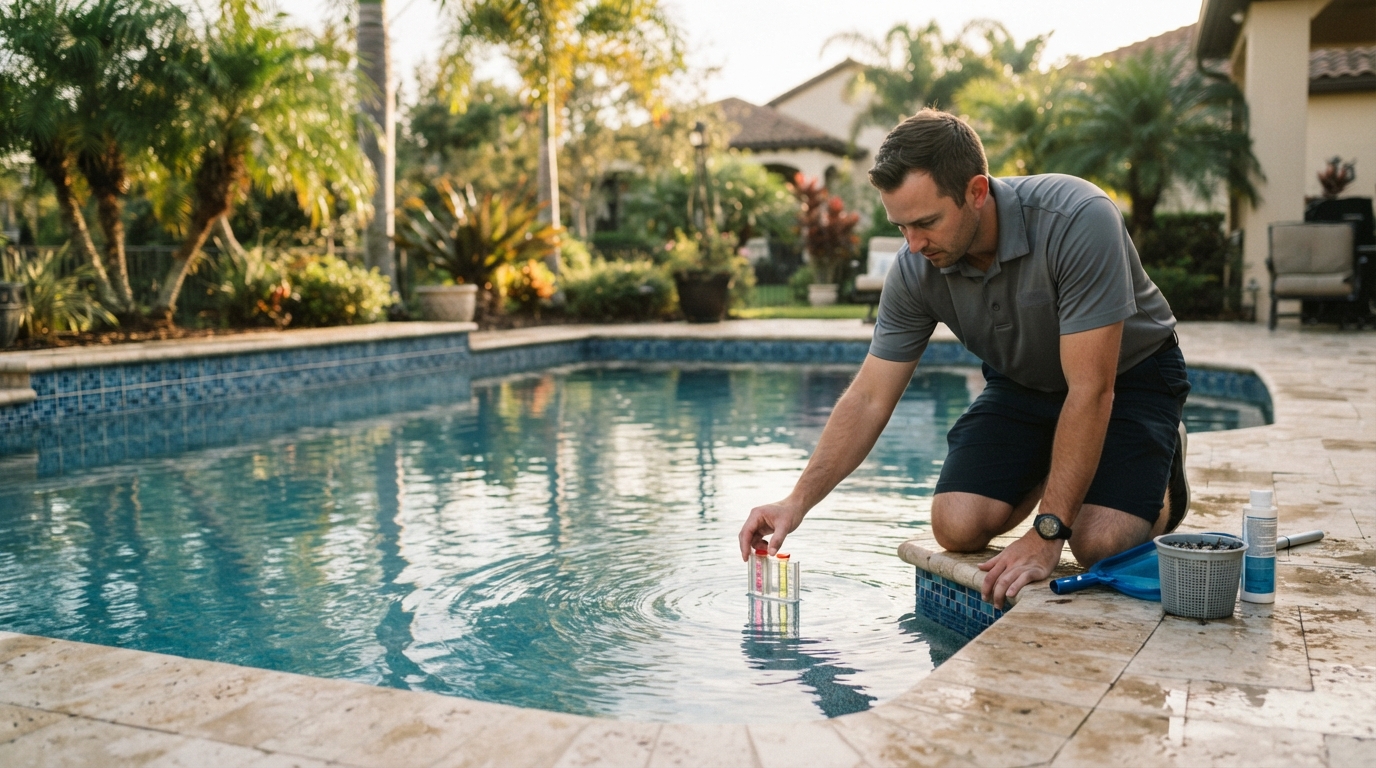
Essentially:
- Routine pool cleaning controls chlorine and pH levels that keep bacteria and recreational water illnesses in check.
- Weekly service in Fort Myers, FL typically covers chemical balancing, filter cleaning, vacuuming, and equipment checks.
- Skipping maintenance can lead to algae growth, cloudy water, and equipment strain, raising long-term repair costs.
A consistent pool cleaning service keeps water chemistry balanced and filtration equipment running properly, directly reducing the risk of bacteria, algae, and waterborne illness in a residential pool. Without regular attention, chlorine and pH levels drift outside safe ranges within days, especially in warm Southwest Florida climates.
A properly maintained pool cleaning service relies on routine testing and adjustment rather than one-time fixes. Pool owners who schedule weekly visits typically see fewer chemical spikes, clearer water, and less strain on pumps and filters compared to those who clean on an irregular basis.
Why Water Chemistry Needs Consistent Monitoring
Pool water chemistry changes daily based on bather load, rainfall, sunlight exposure, and debris. The Centers for Disease Control and Prevention recommends checking disinfectant and pH levels at least twice a day for public facilities, and residential pools benefit from similarly frequent attention during heavy use periods, according to CDC guidelines for pool safety.
Key factors that shift water balance include:
- UV exposure, which breaks down free chlorine faster in sunny climates
- Heavy rain, which dilutes chemical concentration and alters pH
- Bather load, which introduces oils, sweat, and organic material
- Organic debris such as leaves and pollen, common in Fort Myers, FL landscapes
When chlorine or bromine levels fall outside the recommended range, germs are not neutralized as quickly. Although chlorine or bromine at recommended levels kills most germs within minutes, Cryptosporidium can survive in properly treated water for more than 7 days. This is one reason testing frequency matters more than assuming a pool “looks clean.”
What a Routine Cleaning Visit Typically Covers
Weekly pool maintenance generally follows a consistent checklist rather than a single task. A standard visit for a residential pool in Fort Myers, FL often includes the following:
- Testing and adjusting chlorine, pH, and alkalinity levels
- Skimming surface debris and vacuuming the pool floor
- Brushing walls and tile lines to prevent algae buildup
- Emptying skimmer and pump baskets
- Backwashing or rinsing filters as needed
- Inspecting visible equipment for leaks or wear
Pool chemical handling carries real safety stakes beyond water clarity. Pool chemical injuries lead to about 4,500 U.S. emergency department visits each year, and over one-third of these preventable injuries are in children or teens. Proper storage, dosing, and handling during routine service reduce this risk compared to inconsistent at-home treatment.
Comparing Maintenance Approaches
| Approach | Chemical Consistency | Equipment Monitoring | Typical Outcome |
| Weekly professional service | High, tested regularly | Routine visual checks | Stable water, fewer repairs |
| Occasional self-maintenance | Variable, often reactive | Rare unless problem arises | More algae blooms, delayed issue detection |
| Neglected or seasonal-only care | Low, large swings | None until failure | Green water, costly equipment damage |
Inconsistent care tends to shift costs toward emergency cleanups and equipment repair rather than steady, predictable upkeep.
Local Conditions That Affect Pool Water in Fort Myers
Fort Myers, FL, has a humid subtropical climate with heavy rain and intense sun for much of the year, both of which accelerate chemical breakdown and organic debris accumulation in outdoor pools. Homeowners in the area often need closer monitoring during summer storm season than pool owners in drier climates, since rainfall dilution and heat can push chlorine levels out of range within a day or two.
Based in the USA, we serve customers across Fort Myers, FL, showing how maintenance scheduling adapts to regional weather patterns rather than a fixed national calendar.
Frequently Asked Questions
How often should a residential pool be cleaned? Weekly service is standard for most homeowners, though pools with heavy use, nearby trees, or frequent storms may need more frequent attention.
What happens if chlorine levels are not checked regularly? Chlorine depletes from sunlight, rain, and bather load, allowing bacteria and algae to develop faster than most owners notice visually.
Can a cloudy pool still be unsafe even if it looks mostly clear? Yes. Water can appear visually acceptable while chlorine or pH levels sit outside the safe range, which is why regular testing matters more than visual inspection alone.
Does hot, humid weather change how often a pool needs service? Yes. Higher temperatures and UV exposure break down chlorine faster, which is one reason Gulf Coast climates often require closer monitoring than cooler regions.
Business Info
Pool maintenance and repair company serving residential pools in Southwest Florida. Current availability details for Liquid Concepts Pool Service are published for the local service area.