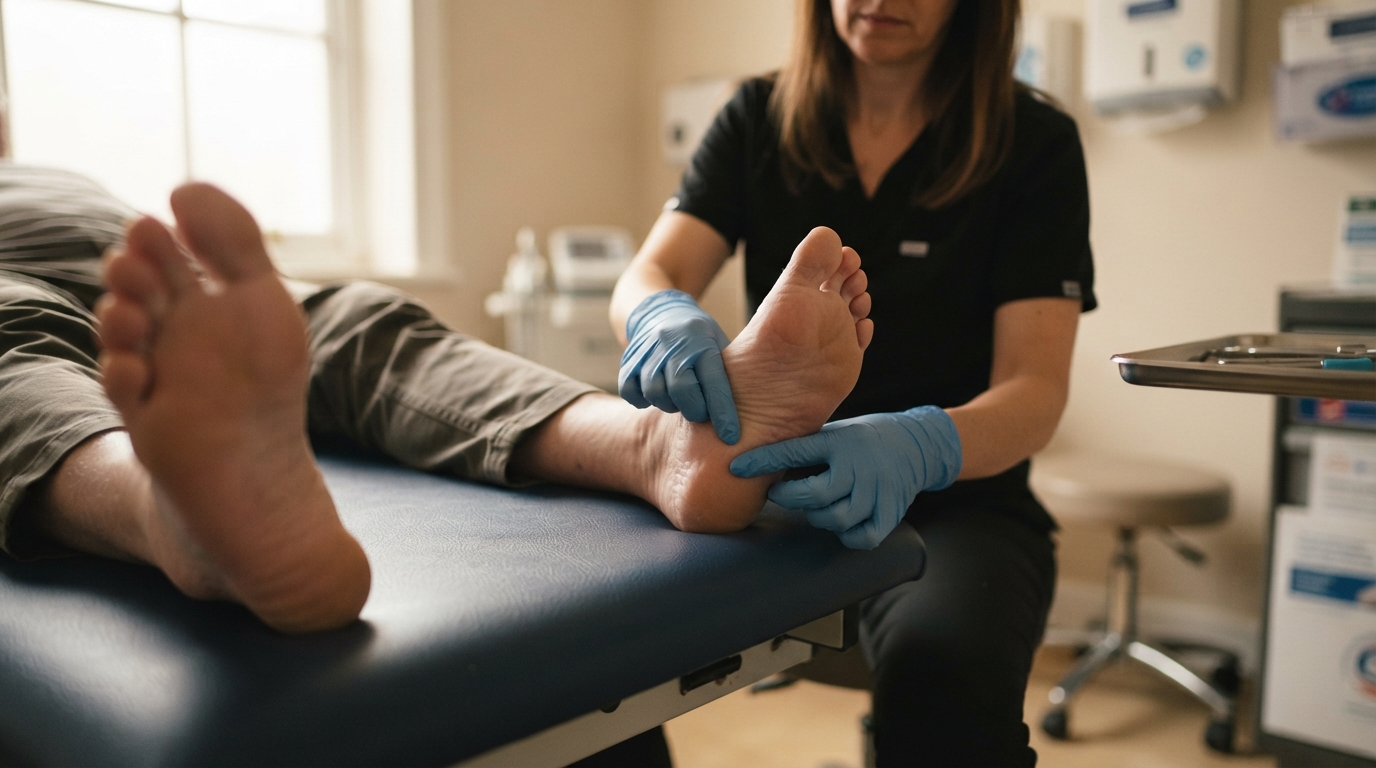
Quick summary:
• Heel pain in Fulshear, TX is most often caused by plantar fasciitis, Achilles tendinitis, or heel spurs, and responds well to a structured, step-up treatment approach.
• Most cases resolve without surgery when caught and addressed early.
• A podiatrist can confirm the diagnosis and match the right treatment to the severity of your condition.
Heel pain rarely resolves on its own when the underlying cause goes unaddressed. A podiatrist-guided treatment plan, starting with conservative care and escalating only when needed, gives most patients the best chance at lasting relief.
If you are searching for Heel Pain Treatment In Fulshear TX, the options available range from at-home stretching and supportive footwear to custom orthotics, injections, and minimally invasive procedures. The right path depends on what is causing your pain and how long it has persisted.
Common Causes of Heel Pain Worth Knowing
There are many different health conditions that can cause heel pain, including plantar fasciitis and Achilles tendinitis. Understanding the source matters because each condition responds differently to treatment.
Pain on the bottom of your heel is often known as plantar fasciitis or heel spur syndrome. It occurs when the thick band of connective tissue running along the bottom of your foot becomes inflamed, resulting in stabbing heel pain that is more noticeable in the morning or after periods of rest.
Posterior heel pain tells a different story. Achilles tendinitis is inflammation of the Achilles tendon as it runs behind the ankle and connects to the back of the heel bone, and is often seen in people who walk or run without properly stretching their posterior leg muscles before activity. If left untreated, the fibers of the Achilles tendon can stretch or tear, leading to degeneration and an increased risk of rupture.
A Step-Up Approach to Heel Pain Treatment
Most problems that cause heel pain get better over time with nonsurgical treatments. Heel pain treatment focuses on easing pain and inflammation, improving foot flexibility, and minimizing stress and strain on your heel.
According to the Cleveland Clinic’s heel pain resource, standard nonsurgical options include NSAIDs with ice, targeted stretching exercises, athletic taping, physical therapy, and orthotic devices.
The table below outlines how treatment typically progresses by severity:
|
Stage |
Typical Treatments |
Notes |
|
Mild / Early |
Rest, ice, NSAIDs, stretching |
First-line; begin immediately |
|
Moderate |
Custom orthotics, physical therapy, night splints |
Used when self-care alone falls short |
|
Persistent |
Corticosteroid or orthobiologic injections |
After several weeks of conservative care |
|
Chronic / Resistant |
Shockwave therapy, surgical options |
Reserved for cases unresponsive to all above |
The most effective treatment plans usually involve a combination of conservative home therapies, mechanical support, and professional medical intervention.
Conservative Care: Where Most Plans Start
The initial treatment is rest, icing, stretching, and nonsteroidal anti-inflammatories (NSAIDs) like ibuprofen. These steps are low-cost and often provide meaningful relief when applied consistently.
Proper footwear support matters as well. Custom orthotics or supportive shoes reduce strain on the plantar fascia ligament. Custom orthotics are designed specifically for your unique foot structure and biomechanics, making them more effective than over-the-counter insoles for structural contributors to heel pain.
When Conservative Care Is Not Enough
When conservative measures fail to alleviate pain, a podiatrist may suggest more advanced medical interventions. These are typically considered after several months of conservative treatment.
Treatment options that may be used include custom orthotics to control abnormal foot function, prescription anti-inflammatory medications, steroid injections or orthobiologic injections to reduce inflammation, and physical therapy when a home stretching regimen is not enough.
Shockwave therapy is a non-invasive procedure that uses sound waves directed at the area of heel pain to stimulate healing. It is generally used for chronic cases that have not responded to more conservative treatments.
It is very rare to need surgery. When it is considered, the goal is to relieve tension in the affected tissue with minimal recovery time.
When to See a Podiatrist in Fulshear
Seeking treatment at the first sign of pain or discomfort is advisable. If left untreated, heel pain can become worse and more difficult to treat. Early evaluation also rules out less common causes such as nerve compression (Baxter’s nerve entrapment) or Haglund’s deformity.
Fulshear Foot and Ankle is a specialized podiatry practice located in Fulshear, TX, led by Dr. Kunal Amin and Dr. Yumna Siddiqui, who prioritize compassionate and personalized care for patients of all ages. The practice provides podiatric services including treatment for heel pain, foot and ankle arthritis, bunions, hammertoes, sports medicine injuries, and more, with in-office digital radiography, diagnostic ultrasound, and custom molded orthotics available on-site.
Frequently Asked Questions
How long does heel pain typically take to resolve? You should notice symptoms improving as soon as you start treating them, but it can take anywhere from a few weeks to a few months for the plantar fascia to heal.
Are custom orthotics better than store-bought insoles for heel pain? Custom orthotics can help with anatomical issues while walking and exercising to distribute pressure more evenly. Store-bought options provide general cushioning but do not address individual foot mechanics.
Can heel pain come back after treatment? If you feel better but symptoms return, try the same at-home treatments used before and follow up with your podiatrist if they do not resolve within a week or two.
Is shockwave therapy safe for heel pain? This non-invasive procedure uses sound waves directed at the area of heel pain to stimulate healing and carries a low risk profile compared to injections or surgery, making it a reasonable option for persistent cases.
Schedule an Evaluation in Fulshear
Heel pain that lingers beyond a week or two warrants a professional assessment. The sooner the cause is identified, the more treatment options remain available and the shorter the recovery tends to be. Fulshear Foot and Ankle PLLC serves patients in Fulshear, Katy, Richmond, and surrounding communities, offering diagnostic imaging, custom orthotics, injections, and physical therapy referrals under one roof. Reaching out early keeps your options open and gets you back on your feet faster.