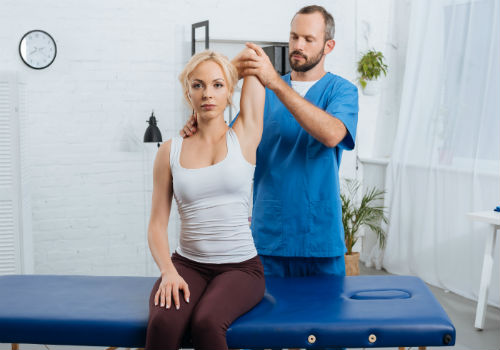
Yes, many people can remain physically active between spinal decompression therapy sessions, but the appropriate type and intensity of exercise depend on their condition, symptoms, and healthcare provider’s recommendations. Gentle movement may be appropriate for some patients, while others may need to temporarily modify activities that place additional stress on their backs.
For individuals receiving treatment for lower back pain, sciatica, or disc-related discomfort, knowing how to approach physical activity can make daily routines easier to manage. The goal is not necessarily to eliminate exercise but to understand which movements are appropriate and which symptoms warrant caution.
Why Does Physical Activity Matter Between Treatment Sessions?
The spine supports everyday movements, including bending, walking, sitting, and lifting. When back pain interferes with these activities, avoiding movement entirely can seem like the safest option.
However, prolonged inactivity is generally discouraged for most cases of uncomplicated lower back pain.
The National Institute for Health and Care Excellence (NICE) recommends encouraging people with lower back pain, with or without sciatica, to continue normal activities when appropriate. Its guidelines also recognize exercise as an important component of conservative back pain management.
Regular, appropriately selected movement can help maintain muscular endurance, joint mobility, and physical function.
Still, exercise recommendations must account for the patient’s diagnosis. Someone experiencing occasional mechanical lower back discomfort may tolerate activities differently from someone with significant nerve symptoms or spinal stenosis.
This distinction is particularly important for patients undergoing nonsurgical spinal decompression because their underlying conditions and responses to treatment can vary considerably.
How Does Spinal Decompression Fit Into an Exercise Routine?
Nonsurgical spinal decompression involves applying controlled traction to the spine through specialized equipment. The technique is intended to change mechanical loading on spinal structures and is sometimes offered to individuals experiencing disc-related discomfort.
It is important to distinguish the intended mechanism of treatment from scientifically established outcomes.
Research on traction-based treatments has produced mixed findings. A Cochrane systematic review found that traction generally provided little or no meaningful improvement in pain or function for broad populations experiencing lower back pain, with or without sciatica.
Consequently, spinal decompression should not be viewed as a guaranteed solution or a substitute for individualized medical evaluation.
People considering treatment can learn more about how providers approach Spinal decompression therapy and discuss whether the service is appropriate for their particular condition.
For patients already receiving decompression therapy, activity recommendations should consider their current symptoms, functional limitations, and any other treatments included in their care plan.
There is no universal exercise schedule that applies to everyone receiving this type of treatment.
Which Exercises May Be Appropriate Between Sessions?
Not every exercise places the same demands on the spine. Activities that involve relatively predictable movements and adjustable intensity may be easier for some patients to tolerate.
The following options are worth discussing with a qualified healthcare professional.
Walking at a Comfortable Pace
Walking is often a practical starting point for people who have been advised to remain active despite lower back discomfort.
It requires minimal equipment, can be adjusted to different fitness levels, and allows individuals to control their pace and duration.
Someone in Mt. Pleasant might prefer a short neighborhood walk instead of returning immediately to a demanding workout.
However, walking is not comfortable for everyone. People with certain forms of lumbar spinal stenosis may experience increasing leg symptoms while standing or walking.
If discomfort worsens with distance, the activity may need modification or further clinical evaluation.
Gentle Mobility Exercises
Controlled mobility exercises may help individuals maintain comfortable movement without immediately returning to strenuous physical activity.
These may involve movements of the hips, pelvis, or lower back performed within a tolerable range.
However, not every stretching or mobility technique is appropriate for every spinal condition.
Some individuals experience worsening symptoms during repeated forward bending, while others find backward bending uncomfortable.
Rather than assuming a particular stretch is universally beneficial, patients should identify movements that have been recommended for their specific circumstances.
Low-Impact Cardiovascular Activity
Depending on symptoms and clinical guidance, certain individuals may tolerate stationary cycling or other low-impact cardiovascular activities.
These exercises can provide opportunities for physical activity without the repeated impact associated with running or jumping.
Nevertheless, equipment selection and body positioning matter.
For example, prolonged forward-leaning positions may aggravate symptoms in some people with disc-related discomfort. Others may find that position more comfortable than standing upright.
An activity’s low-impact classification does not automatically make it appropriate for every patient.
Supervised Strengthening Exercises
Muscular strength and endurance contribute to everyday physical function.
An individualized strengthening program may incorporate exercises targeting the trunk, hips, and other muscles involved in movement and stability.
The specific exercises should depend on the patient’s capabilities and clinical findings.
Rather than prescribing a universal set of movements, a healthcare professional can determine whether strengthening is appropriate and how resistance, repetitions, and progression should be managed.
Which Activities May Need Modification?
A person receiving back decompression treatment does not necessarily need to avoid every demanding physical activity indefinitely.
However, certain movements may require temporary adjustments, particularly when symptoms remain active.
Heavy Lifting
Exercises such as heavy deadlifts, weighted squats, and other resistance movements can place substantial demands on the trunk and supporting structures.
These movements are not inherently harmful to every person with lower back pain.
However, individuals experiencing significant symptoms may need to reduce resistance, modify technique, or temporarily choose alternatives.
Returning to heavy lifting should depend on movement tolerance, physical capacity, and guidance from an appropriate clinician.
High-Impact Exercise
Running, jumping, and certain athletic drills introduce repeated forces that the body must absorb and manage.
For some individuals, these activities are well tolerated. Others may experience symptom aggravation, particularly when returning to exercise after a period of reduced activity.
A gradual return, rather than an immediate resumption of previous training intensity, may be appropriate.
Repeated Bending and Twisting
Activities involving frequent spinal flexion, rotation, or combined bending and lifting may aggravate certain back conditions.
This does not mean these movements are universally dangerous.
Instead, their suitability depends on the individual, the demands of the activity, and whether particular movement patterns reproduce symptoms.
People should avoid interpreting temporary symptom relief after a decompression session as automatic clearance for unrestricted exercise.
How Soon After a Session Can Someone Exercise?
There is no well-established, universally applicable waiting period for exercise following nonsurgical spinal decompression.
Some patients may be comfortable completing routine activities after an appointment. Others may require adjustments because of their underlying symptoms or treatment response.
The appropriate timing depends on several factors:
- The condition being evaluated or treated
- Whether symptoms are stable, improving, or worsening
- The type and intensity of the planned activity
- Current physical conditioning
- Instructions from the treating healthcare professional
Importantly, someone feeling comfortable immediately after treatment does not necessarily mean their underlying condition has resolved.
Patients should obtain individualized guidance rather than relying on an arbitrary rule requiring a specific number of hours without exercise.
How Can Patients Tell Whether They Are Doing Too Much?
A useful starting point is to observe how the body responds during an activity and afterward.
Pain alone does not always indicate tissue damage, but worsening symptoms should not be ignored.
Individuals may need to modify or discontinue an exercise when they notice:
- Increasing back or leg pain during activity
- New or worsening tingling or numbness
- Symptoms spreading farther into an arm or leg
- Reduced ability to complete normal movements
- Discomfort that remains substantially worse after activity
Symptom patterns can provide useful information for a healthcare professional assessing exercise tolerance.
For example, someone who experiences mild discomfort during a short walk may need a different approach from someone who develops increasing leg weakness.
New or progressive weakness, numbness around the groin or saddle area, or new bladder or bowel control difficulties require urgent medical evaluation. These symptoms should not be managed through exercise adjustments or an additional decompression appointment.
When symptoms change significantly, reassessment is more important than pushing through a planned workout.
Does Exercising Between Sessions Improve Treatment Results?
Exercise can play a meaningful role in managing many forms of lower back pain, but it is important not to confuse the benefits of exercise with evidence that it enhances spinal decompression outcomes.
A 2025 Cochrane overview found that exercise therapies probably improve pain and physical function in people with chronic nonspecific lower back pain compared with placebo or no treatment.
The same review found that traction probably does not reduce chronic lower back pain compared with sham traction.
These findings support considering appropriately selected exercise as part of evidence-informed back pain management, but they do not establish that exercising between decompression sessions improves the effectiveness of traction.
People should therefore evaluate their progress using practical measures such as walking tolerance, daily function, and changes in symptoms rather than assuming that combining two interventions guarantees better results.
What Should Active Adults Consider Before Returning to Sports?
For active individuals in Mt. Pleasant, back discomfort can interrupt familiar routines such as golfing, recreational running, strength training, or participating in fitness classes.
Returning to these activities is often more complex than deciding whether exercise is permitted.
A golfer, for instance, may tolerate walking comfortably but experience symptoms when rotating through a full swing.
Someone who regularly lifts weights may perform daily household activities without difficulty but struggle with exercises involving heavier resistance.
These differences illustrate why activity-specific assessment matters.
Before returning to demanding exercise, individuals should consider whether they can perform the movement comfortably, maintain appropriate control, and tolerate the activity without a significant increase in symptoms.
A gradual progression may be more sensible than returning immediately to previous training loads.
Patients with persistent neurological symptoms or substantial functional limitations should seek appropriate medical guidance before attempting higher-intensity activities.
Questions Worth Asking Before the Next Treatment Session
Patients can make more informed exercise decisions by discussing their regular activities with their healthcare provider.
Useful questions include:
Are there movements I should temporarily modify?
Recommendations should relate to the individual’s diagnosis and symptom response rather than relying on blanket restrictions.
Can I continue my normal fitness routine?
The answer may depend on the exercises involved, current intensity, and whether particular movements aggravate symptoms.
How should I respond if symptoms increase during exercise?
Patients should understand which changes can be monitored, which require an activity modification, and which warrant medical reassessment.
When can I increase resistance or exercise duration?
A provider can help establish appropriate criteria for progressing activity based on physical function and symptom tolerance.
These conversations are particularly important for people who want to maintain an active lifestyle while managing persistent spinal discomfort.
Maintaining Movement Without Ignoring Symptoms
Staying active between spinal decompression sessions may be appropriate, but exercise decisions should reflect individual health needs rather than a universal treatment schedule.
Walking, carefully selected mobility exercises, low-impact activities, and appropriately supervised strengthening may be reasonable for certain patients. Heavy lifting, high-impact exercise, and movements that aggravate symptoms may require modification.
The broader goal is to maintain physical function while responding appropriately to symptoms and clinical findings.
Anyone receiving spinal decompression should discuss exercise recommendations with their healthcare provider, particularly when experiencing nerve-related symptoms or difficulty returning to normal activities.
About Harbor Wellness Co.
Harbor Wellness Co. is a chiropractic practice located in Mt. Pleasant, South Carolina, offering chiropractic care and nonsurgical spinal decompression services. Their team includes licensed Doctors of Chiropractic, including Dr. Brandon Carroll, a Life University graduate with additional certifications in sports injury rehabilitation and extremity adjusting. For appointment inquiries, contact their office at (843) 972-3174 (tel:8439723174), or Find their office on Google Maps.