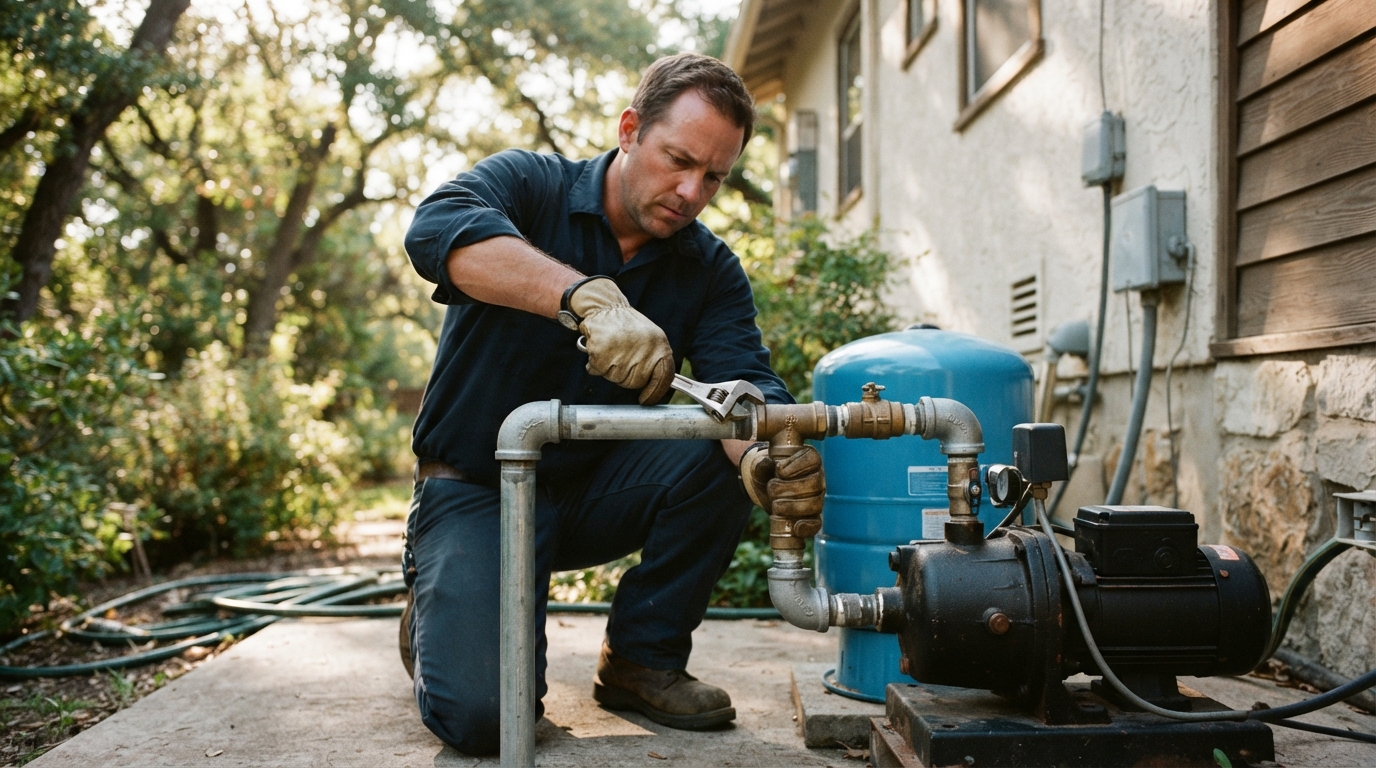
In short:
• Pump installation covers the connection of a well or booster pump to a home’s plumbing and pressure tank system, a process that affects water flow, pressure consistency, and equipment lifespan.
• Soil type, well depth, and existing plumbing in New Canaan, CT often determine which pump configuration fits a property.
• Pressure tank sizing and pump placement are two of the most common factors that affect long-term system performance.
A properly installed well pump delivers consistent water pressure to fixtures while protecting the pressure tank and plumbing lines from strain. Homeowners researching Pump Installation Services are typically dealing with a new well, a failing pump, or inconsistent water pressure that points to equipment nearing the end of its service life.
Pump systems vary based on well depth, water demand, and the layout of a home’s plumbing. A shallow well pump works differently than a submersible pump, and matching the right unit to a property’s conditions affects how long the system lasts and how evenly pressure holds across multiple fixtures.
How Pump Installation Works
Installing a pump involves more than placing a unit in a well casing. Technicians evaluate static water level, pipe diameter, and electrical requirements before selecting equipment sized to the property’s water demand.
Typical steps in a residential pump installation include:
• Assessing well depth and water table conditions
• Selecting a pump type suited to flow rate and household demand
• Connecting the pump to the pressure tank and distribution lines
• Testing pressure switch settings and verifying consistent flow
• Confirming electrical connections meet local code requirements
Each step affects system reliability. A pump sized too small for a household’s demand cycles on and off frequently, which shortens its working life. One sized too large can cause pressure surges that stress fittings and tank bladders.
Pressure Tanks and Why They Matter
A pressure tank works alongside the pump to maintain steady water pressure and reduce how often the pump cycles. Tank sizing depends on household water use, the number of fixtures, and the pump’s flow rate.
| Tank Consideration | Why It Matters |
| Tank size | Undersized tanks cause frequent pump cycling |
| Bladder condition | A failed bladder leads to pressure swings |
| Pressure switch setting | Determines when the pump turns on and off |
| Air charge | Incorrect air pressure reduces tank efficiency |
Homes in New Canaan, CT with older plumbing or wells that have not been serviced in several years often benefit from a pressure tank evaluation alongside pump work, since a mismatched tank can undermine even a correctly installed pump.
Signs a Pump Needs Replacement or Service
Not every water pressure issue requires a full pump replacement, but certain signs point toward equipment failure rather than a minor adjustment.
• Water pressure that fluctuates without a clear cause
• A pump that cycles on and off rapidly, known as short cycling
• Air sputtering from faucets, which can indicate a failing well or pump
• Unusually high electric bills tied to pump run time
• Visible corrosion or water pooling near the pressure tank
According to the EPA’s private well guidance, homeowners relying on private wells are responsible for maintaining their own water systems, including pumps and pressure equipment, since these systems fall outside municipal oversight.
Business Info
Based in Wilton, CT, the company behind this guide serves properties across New Canaan, CT, working with homeowners on private well systems and related pressure equipment. Details on pump and pressure tank work are published through Findorak Drilling Inc.
Frequently Asked Questions
How long does a typical pump installation take? Installation time depends on well depth, existing plumbing condition, and whether a pressure tank also needs replacement, so timelines vary by property.
Can a pump be repaired instead of replaced? Some issues, such as a failing pressure switch or worn capacitor, can be repaired without replacing the entire pump, though age and corrosion often make replacement more practical.
Does well water quality affect pump performance? Sediment and mineral content in well water can accelerate wear on pump components, which is one reason periodic inspection matters for long-term reliability.
What causes a pump to run constantly? Continuous running often points to a leak in the system, a failing pressure tank bladder, or a pump that is undersized for household demand.
Pump installation decisions affect water pressure, equipment lifespan, and long-term maintenance costs, making it worthwhile for homeowners to understand how pump type, pressure tank sizing, and well conditions interact before equipment is replaced or upgraded.
For published service area and contact details, readers can Visit Loren Findorak Drilling Inc. Website.