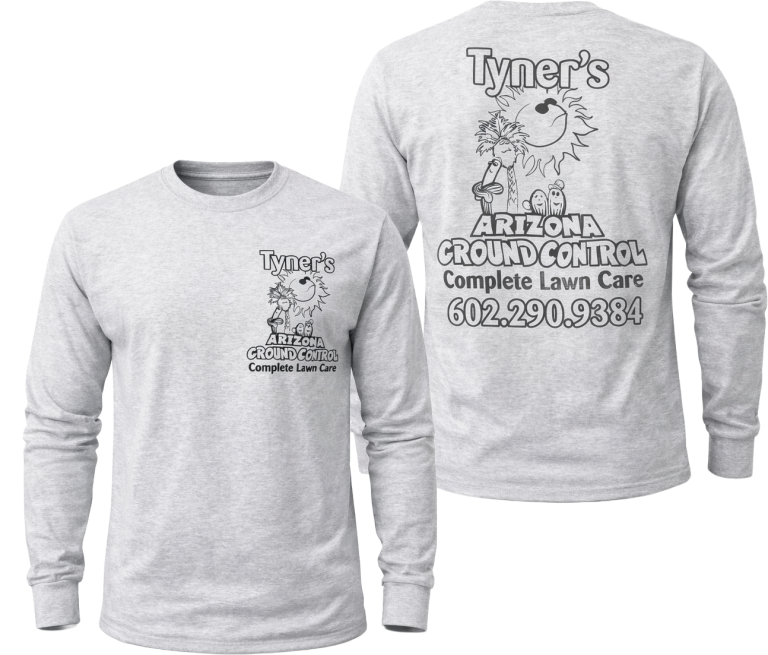
Custom T-shirt reorders may differ from the original batch because garment manufacturing, fabric dye lots, ink appearance, and production conditions can change between orders. Even when a business uses the same artwork and shirt style, differences in materials, inventory, or printing specifications can affect the finished apparel.
Reordering branded shirts often seems straightforward. A company has already approved the design, employees are familiar with the uniforms, and the original garments have established expectations for appearance and comfort.
However, repeating an order does not necessarily mean every production variable remains identical.
A shirt produced several months later may come from a different manufacturing batch. The same garment color might have a slightly different shade, or a particular size may no longer be available in the original style.
For businesses, schools, teams, and organizations in Phoenix, understanding these variables helps explain why professional oversight matters when maintaining branded apparel over time.
Why Can the Same T-Shirt Style Look Different in a Later Order?
A garment’s product name and style number identify a particular item, but they do not necessarily guarantee that every manufacturing batch will look or feel identical.
Apparel manufacturers produce garments using fabrics, dyes, equipment, and production schedules that can vary over time.
Although quality-control procedures aim to maintain product consistency, small differences may still occur.
Fabric Production Can Vary Between Batches
Textile manufacturing involves several processes before a blank T-shirt reaches a printing company.
Fibers are converted into yarn, fabric is knitted or woven, and the material undergoes dyeing and finishing.
Variations in these processes can influence fabric characteristics.
For example, two batches of the same cotton-polyester shirt may have slightly different surface textures or fabric behavior, even if their listed composition remains unchanged.
These differences may be subtle enough to go unnoticed when the garments are viewed separately.
However, they can become more apparent when new shirts are placed directly beside older ones.
Dye Lots Can Produce Slight Color Differences
A dye lot refers to a batch of fabric or garments colored during a particular production process.
Manufacturers aim for consistent colors, but different dye lots can produce small shade variations.
A navy shirt from one manufacturing batch may appear slightly darker or warmer than a navy shirt produced later.
The difference does not automatically indicate inferior manufacturing.
Dyeing involves multiple variables, and color matching is generally managed within acceptable production tolerances rather than absolute visual identity.
This becomes important when a company wants replacement uniforms to match apparel that employees already wear.
Fabric Finishing Can Influence Appearance
Garments may undergo finishing treatments that affect their softness, surface texture, or overall appearance.
Depending on the product, these processes can influence how the fabric feels and how its surface interacts with printed ink.
Even when a manufacturer maintains the same general garment specifications, minor differences in finishing may be noticeable between batches.
Businesses that prioritize a particular fabric feel should understand that a matching product number does not necessarily eliminate every variation.
How Can Shirt Color Influence the Appearance of Reprinted Logos?
The color of the blank shirt affects how printed artwork appears.
This is especially noticeable when light-colored ink is applied to darker garments or when a design uses highly specific brand colors.
If the garment shade changes slightly between orders, the finished print may also appear different.
Contrast Changes the Perceived Print Color
Color perception depends partly on the surrounding surface.
A white logo printed onto a deep navy shirt may appear brighter than the same logo printed onto a lighter blue garment.
Even when the ink formulation remains consistent, a change in background color can influence how customers perceive the design.
For example, a Phoenix business might reorder dark gray company shirts several months after its original purchase.
If the new blanks have a slightly different gray tone, the printed logo may appear to have changed, even when the artwork and nominal ink color remain the same.
The difference comes from the relationship between the ink and the garment.
Garment Color Can Affect Ink Coverage
Certain printing applications require additional consideration to achieve adequate ink opacity.
A light-colored design on a dark shirt may use an underbase or an ink formulation selected for stronger coverage.
Changes in fabric composition or garment color can influence how these printing decisions perform.
The result may be a slightly different level of brightness or visual contrast.
Professional custom T shirt printing services assess these relationships because matching the intended design involves more than selecting ink with the same color name.
Why Might Printed Ink Colors Differ Between Production Runs?
Screen printing uses ink formulations and production processes intended to reproduce artwork consistently.
However, color reproduction is influenced by several factors, including ink mixing, application, garment material, and curing.
These factors can create subtle differences between production runs.
Ink Formulations and Color Matching
Some custom apparel projects use standard ink colors, while others require colors selected to correspond with particular branding specifications.
A recognized color reference can help communicate the intended result.
However, the appearance of a printed color also depends on the material receiving the ink.
A color that appears consistent on one fabric may look slightly different on another.
Additionally, production tolerances can affect how closely a later print matches an earlier one.
Color references improve communication and consistency, but they do not guarantee identical appearance under every condition.
Ink Deposit and Print Texture
The amount of ink transferred onto a garment influences the finished print.
Ink deposit can affect opacity, texture, and the way the design appears against the fabric.
In traditional screen printing, these characteristics are influenced by the selected screen, ink system, and production settings.
If a reorder requires a different garment or printing setup, the resulting print may have a slightly different appearance or feel.
A professional printing provider evaluates these variables rather than assuming that an unchanged digital design guarantees an unchanged physical result.
Curing Conditions
Many textile screen printing inks require controlled heat curing to achieve their intended performance characteristics.
Curing requirements depend on the ink system and garment material.
Differences in material composition or production conditions may affect how the printed design behaves.
Appropriate curing is essential for print performance, but variations in production do not necessarily indicate that a previous or subsequent batch was processed incorrectly.
The important consideration is whether the ink and garment are compatible and whether the finished product meets the relevant production requirements.
Can Changes in T-Shirt Fabric Affect Reorder Consistency?
Yes. Changes in garment fabric can influence both the shirt’s appearance and the way printed artwork looks.
Even if a replacement garment has the same general color and style, differences in fiber content or knit construction may affect the finished result.
Cotton and Cotton-Blend Shirts
Cotton and cotton-blend T-shirts can have different surface characteristics.
A shirt made primarily from cotton may feel and print differently from a garment containing a higher percentage of polyester.
If a supplier changes a product’s composition, the printing provider may need to evaluate how the material interacts with the selected ink.
This is particularly important for companies maintaining uniforms across several ordering periods.
A replacement garment may look similar in a catalog but have different characteristics when worn or decorated.
Lightweight Versus Heavier Fabrics
Fabric weight also influences garment structure.
A lightweight shirt may drape differently from a heavier alternative, even when both feature the same printed design.
The difference can affect how the artwork appears on the body.
A large graphic may look more prominent or behave differently as the garment moves, depending on the material.
For organizations replacing discontinued apparel, these factors can make an otherwise similar shirt feel different from the original.
Heathered and Textured Materials
Heathered shirts contain visible color variations created through their yarns or fabric construction.
These variations can influence how printed designs appear.
Two heathered garments with similar product descriptions may not have identical surface patterns or fabric compositions.
If a reorder uses a different heathered shirt, the printed colors and overall appearance may change.
This is one reason professional garment selection remains relevant even when the artwork has already been approved.
What Happens When the Original T-Shirt Style Is Discontinued?
Garment discontinuation is another common source of differences between original orders and reorders.
Apparel manufacturers may replace older styles, change available colors, or discontinue certain sizes.
When this happens, the exact blank shirt used for the original order may no longer be available.
A printing provider may need to identify a comparable alternative.
Similar Shirts Are Not Always Identical
Two shirts may share a color description, fabric weight, and general fit while still differing in construction.
The replacement might have a different collar shape, sleeve length, shoulder seam, or body width.
These details affect the garment’s appearance and may influence how printed artwork sits on the shirt.
For example, a company replacing its original crew-neck work shirts may discover that the closest available option has a slightly different fit.
The printed logo could remain consistent in physical size while appearing different because the garment itself has changed.
Manufacturer Updates Can Affect Existing Styles
A style does not always need to be discontinued for changes to occur.
Manufacturers may update product specifications or introduce revised versions.
When a reorder takes place after such an update, the garments may differ from those purchased previously.
For businesses maintaining long-term apparel programs, these changes highlight the importance of evaluating current product specifications rather than relying exclusively on an old order description.
Why Do Artwork Files and Production Records Matter for Reorders?
Artwork records help establish what was used during the original production run.
These records can include approved designs, artwork dimensions, color references, and printing specifications.
When accurate information is available, a printing provider has a clearer starting point for reproducing the original appearance.
However, artwork records cannot eliminate differences caused by unavailable garments or changing materials.
Digital Artwork Is Only One Part of the Original Order
A logo file contains information about the intended design, but it does not fully describe the finished shirt.
The original order also involved decisions about garment style, ink colors, printing dimensions, and placement.
If a reorder is produced using only the logo file, important details may be missing.
For example, a company may remember that its original shirts featured a large centered graphic.
Without documented dimensions, however, the exact physical size may be uncertain.
Professional order records can help reduce that ambiguity.
Revised Artwork Can Introduce Unexpected Changes
Organizations sometimes update their logos or brand materials between apparel orders.
A revised file may contain different spacing, lettering, or proportions, even when the design appears nearly identical.
These differences can become more noticeable when the image is printed at a larger size.
A reorder should therefore be understood as a new production project referencing earlier work, rather than an automatic duplication of every previous detail.
Can Different Printing Methods Change the Appearance of a Reorder?
Yes. If the printing method changes, the finished result may look or feel different.
Traditional screen printing, for example, transfers ink through a prepared mesh screen.
Other apparel decoration methods use different materials and application processes.
These differences can influence ink texture, color reproduction, and garment feel.
Why Production Method Consistency Matters
A design originally produced through screen printing may not look identical when reproduced using another decoration method.
Even when the same digital artwork is used, the physical print characteristics may differ.
This does not automatically make one method better than another.
Each has its own technical considerations and suitable applications.
However, businesses seeking visual consistency should understand when a change in method could affect the finished apparel.
Changes in Order Quantity
Reorders are not always the same size as the original order.
A business may initially purchase shirts for an entire workforce and later need only a small number of replacements.
Different order quantities can affect production planning and the available decoration options.
A professional provider can explain the relevant considerations without assuming that every reorder will use exactly the same production approach.
How Can Reorders Affect Employee Uniform Programs?
Employee uniform programs often involve recurring apparel purchases.
New employees need shirts, existing garments wear out, and organizations may expand their teams.
Over time, these purchases can result in multiple production batches being worn simultaneously.
That makes even subtle differences more noticeable.
Matching Existing Staff Apparel
Imagine a Phoenix service company that purchased branded T-shirts for its employees earlier in the year.
Several months later, additional employees join the team.
The company orders the same shirts with the same logo.
If the garment supplier has introduced a new dye lot, the replacement shirts may have a slightly different shade.
The difference could be minor, but it may become visible when employees stand together.
This does not necessarily mean the reorder was produced incorrectly.
It may reflect normal variation in the blank garments.
Maintaining Consistent Brand Presentation
Businesses often want their employee apparel to support a recognizable, coordinated appearance.
Consistency depends on several connected factors, including garment color, logo dimensions, and print quality.
When these characteristics remain reasonably aligned, minor differences between production batches may be acceptable.
However, organizations with strict branding requirements may need additional consideration when ordering replacement apparel.
A professional Custom Made T Shirt Printing provider can help businesses evaluate the relationship between current garment availability, artwork specifications, and the intended appearance of their branded shirts.
Why Is Professional Review Important Before Producing a Reorder?
Professional review helps identify whether the original production specifications can still be followed.
This is particularly useful when significant time has passed between orders.
The original garment may still be available, or a manufacturer may have introduced a different version.
Artwork records may be complete, or some production details may need confirmation.
A printing provider can evaluate these circumstances and explain which factors may affect the new batch.
Understanding Acceptable Variation
Not every difference between production runs is a defect.
Small changes in fabric shade, texture, or perceived ink color may fall within ordinary manufacturing and printing variation.
The appropriate tolerance depends on the garment, decoration method, and customer’s requirements.
A company ordering basic event shirts may have different expectations from an organization maintaining a tightly controlled corporate identity.
Professional communication helps establish which characteristics are most important before production begins.
Recognizing When Changes Are Significant
Some differences are more substantial than ordinary batch variation.
A replacement garment with a noticeably different fit, a substantially changed logo, or an unsuitable fabric composition may not meet the intended requirements.
These situations deserve attention because they can affect both appearance and usability.
Professional oversight helps distinguish expected material variation from changes that warrant additional discussion.
Final Thoughts: Why Repeat Orders Are Not Always Identical
Custom T-shirt reorders can differ from the original batch even when the design and product description appear unchanged.
Fabric dye lots, garment manufacturing, ink characteristics, artwork records, and production conditions all influence the finished result.
Some variations are subtle and may have little effect on how the shirts are used.
Others can become more noticeable when new garments are worn beside older ones or when an organization requires closely coordinated branding.
The most important distinction is between reproducing the same design and reproducing every physical characteristic of the original product.
Those goals are related, but they are not always achievable to the same degree.
For Phoenix businesses, schools, teams, and organizations that regularly order branded apparel, professional printing services can help establish realistic expectations and evaluate available garment options.
A reorder is most successful when the organization understands which details can be maintained consistently and which may change because of materials or production circumstances.
By recognizing these factors, customers can make better-informed decisions about repeat apparel purchases while preserving the recognizable identity of their original designs.
About PHX Screen Printing
PHX Screen Printing serves Phoenix-area businesses, schools, teams, and organizations with custom screen printing, embroidery, and branded apparel services. As a division of Fast-Trac Designs, they operate from 302 W. Melinda Lane, Suite 3, Phoenix, AZ 85027. For questions about custom T-shirt orders, they can be reached at 602-314-4813, and customers can view their business location on Google Maps.