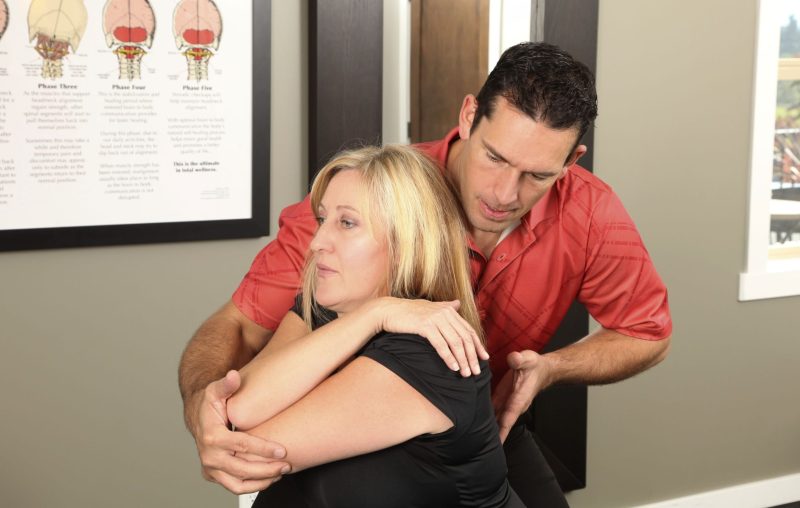
Tendon calcification matters before shockwave therapy because calcium deposits can change the diagnosis, treatment options, and expected response to acoustic-wave treatment. Shockwave therapy has stronger clinical support for certain calcific rotator cuff conditions than for similar shoulder tendon problems without calcification, making an accurate diagnosis important before treatment begins.
Shoulder discomfort can develop for several reasons, including tendon irritation, joint problems, muscular injuries, and changes affecting the rotator cuff. Although these conditions may produce similar symptoms, they do not necessarily respond to the same treatments.
For patients considering non-invasive shoulder care, understanding whether calcium deposits are present can influence which interventions deserve consideration. A professional evaluation helps establish whether acoustic-wave treatment is appropriate or whether another approach may better address the underlying condition.
What Is Tendon Calcification in the Shoulder?
Tendon calcification occurs when calcium-containing deposits develop within tendon tissue. In the shoulder, these deposits most commonly involve the rotator cuff, a group of muscles and tendons responsible for supporting and moving the shoulder joint.
The supraspinatus tendon is frequently affected, although deposits can develop in other rotator cuff tendons.
This condition is known as calcific rotator cuff tendinopathy, sometimes called calcific tendinitis.
Calcium deposits are different from bone spurs, joint arthritis, or ordinary muscle tightness. They develop within tendon tissue rather than representing new bone formation.
Not every deposit produces discomfort. Some people have calcifications visible on imaging without experiencing noticeable symptoms.
Others develop significant shoulder pain and restricted movement, particularly during certain stages of the condition.
This variation is important because identifying a deposit does not automatically establish that it is responsible for the patient’s symptoms.
Clinical findings must connect the imaging abnormality with the patient’s actual shoulder complaints.
Why Can Calcific Tendinopathy Cause Significant Shoulder Pain?
Calcific tendinopathy can involve different biological phases, and symptoms may change as the condition progresses.
During the formative phase, calcium accumulates within the tendon. Some patients experience relatively mild discomfort, while others notice pain during shoulder activity.
The condition may later enter a resorptive phase, during which the body begins breaking down the deposits.
This phase can be associated with a pronounced inflammatory response and substantial pain.
Patients may experience difficulty lifting the arm, reaching overhead, or sleeping comfortably because of shoulder discomfort.
However, the severity of pain does not reliably indicate the size of a calcium deposit.
A relatively small deposit can sometimes be associated with considerable symptoms, while a larger deposit may produce little discomfort.
The relationship between pain, tissue changes, and tendon function is complex.
A qualified healthcare provider must consider the clinical presentation rather than assuming that a visible deposit explains every symptom.
How Is Calcific Tendinopathy Different From Other Rotator Cuff Problems?
Rotator cuff tendinopathy is a broad term describing tendon-related pain and functional problems affecting the shoulder.
Some cases involve calcium deposits, while others do not.
This distinction is especially important when considering shockwave therapy.
Calcific Rotator Cuff Tendinopathy
Calcific tendinopathy involves identifiable calcium deposits within the affected tendon.
Depending on the condition’s stage, these deposits may be associated with inflammation, pain, and restricted shoulder movement.
The presence of calcification creates a specific treatment consideration because certain extracorporeal shockwave protocols have been studied for their effects on pain, function, and calcium deposits.
However, treatment outcomes vary, and the presence of calcification alone does not guarantee improvement.
Noncalcific Rotator Cuff Tendinopathy
Noncalcific tendinopathy involves tendon-related symptoms without the calcium deposits characteristic of calcific disease.
The condition may be associated with changes in tendon structure, mechanical loading, or other musculoskeletal factors.
Although patients may experience similar discomfort during arm movement, the available evidence does not support treating these conditions as interchangeable.
A patient with noncalcific tendon pain may require an approach emphasizing rehabilitation and other evidence-based care rather than shockwave treatment.
The distinction demonstrates why treatment selection should follow a proper diagnosis rather than relying on the general description of shoulder pain.
Why Does Calcification Change Shockwave Therapy Recommendations?
Shockwave therapy uses externally generated acoustic pressure waves directed toward a selected treatment area.
Different systems produce different wave characteristics, including variations in energy, depth, and how pressure is distributed through tissues.
Extracorporeal shockwave therapy has been investigated for several musculoskeletal conditions, particularly certain tendon disorders.
In calcific rotator cuff tendinopathy, research has examined whether treatment may improve symptoms and influence calcium deposits.
However, the findings are not identical across all shoulder conditions.
What Do Clinical Guidelines Recommend?
A 2025 clinical practice guideline published in the Journal of Orthopaedic & Sports Physical Therapy distinguishes between calcific and noncalcific rotator cuff tendinopathy.
The guideline states that clinicians may consider extracorporeal shockwave therapy for adults with calcific rotator cuff tendinopathy to reduce pain and disability.
For rotator cuff tendinopathy without calcification, the same guideline recommends against using extracorporeal shockwave therapy for those outcomes.
These recommendations highlight why confirming the diagnosis matters.
The treatment is not automatically appropriate simply because discomfort involves a shoulder tendon.
What Does the Research Show?
A 2024 systematic review and meta-analysis published in Physiotherapy Research International evaluated 21 randomized controlled trials examining extracorporeal shockwave therapy for calcific rotator cuff tendinopathy.
The review found improvements in certain pain and functional outcomes compared with sham treatment.
However, ultrasound-guided needling procedures performed better for some pain outcomes, and the overall certainty of the evidence was rated very low.
These findings suggest that extracorporeal shockwave therapy may have a role for selected patients, but they do not establish that it is the preferred treatment in every case.
They also do not prove that all acoustic-wave systems deliver equivalent clinical outcomes.
A responsible treatment decision must consider the particular diagnosis, device characteristics, available evidence, and individual medical circumstances.
How Do Healthcare Providers Confirm Tendon Calcification?
Physical examination helps evaluate shoulder function, but it cannot reliably confirm calcium deposits within a tendon.
A patient with calcific tendinopathy may experience pain during arm elevation, restricted shoulder movement, or tenderness around the affected region.
However, similar findings can occur with noncalcific tendon problems, bursitis, adhesive capsulitis, and other shoulder conditions.
Diagnostic imaging may therefore be necessary when calcification is suspected.
Shoulder X-Rays
X-rays can reveal many calcium deposits within rotator cuff tendons.
The appearance, location, and size of the deposits may help healthcare providers assess the condition.
However, a visible deposit must still be interpreted alongside the clinical examination.
An X-ray finding does not necessarily identify the only source of the patient’s discomfort.
Diagnostic Ultrasound
Musculoskeletal ultrasound can provide information about tendon structure and calcium deposits.
It may also help assess surrounding tissues and identify other abnormalities affecting the shoulder.
Ultrasound is particularly useful when clinicians need additional detail about the location or appearance of a deposit.
MRI and Additional Evaluation
MRI may be considered when the diagnosis remains uncertain or another shoulder condition is suspected.
For example, significant weakness or a history of trauma may raise concern about a rotator cuff tear.
MRI can provide information about tendon integrity and other soft tissues, although X-rays and ultrasound are often more useful for directly identifying calcifications.
Not every patient requires every imaging test.
The appropriate investigation depends on the clinical findings and the information needed to guide treatment.
Does the Size of a Calcium Deposit Determine Treatment Success?
The size of a calcium deposit is one factor that may influence clinical decision-making, but it does not independently predict treatment outcomes.
A large deposit may be associated with restricted function, while a smaller deposit may be painful during an inflammatory phase.
Other characteristics may also matter, including the deposit’s location, consistency, appearance, and relationship to surrounding structures.
The duration of symptoms and the patient’s existing shoulder function can further influence treatment considerations.
This is why providers should avoid making treatment recommendations based solely on deposit measurements.
A comprehensive assessment is needed to determine whether the calcium deposit is clinically relevant and whether the proposed intervention is appropriate.
For example, a patient may have a visible deposit alongside another shoulder condition that contributes substantially to pain.
Treating the deposit alone may not address every source of discomfort.
Can Shockwave Therapy Remove Shoulder Calcium Deposits?
Certain extracorporeal shockwave protocols have been associated with changes in calcium deposits, including partial or complete resorption in some patients.
However, the mechanism and results vary according to the treatment method, deposit characteristics, and individual response.
Some research has found differences between higher-energy and lower-energy shockwave protocols.
Other studies have examined focused and radial shockwave systems.
These technologies are not identical, and research findings from one type of equipment should not automatically be applied to another.
Furthermore, reductions in deposit size do not always correspond directly with improvements in pain or function.
A patient may experience symptom improvement without complete disappearance of calcification.
Conversely, imaging changes may occur without the expected functional improvement.
This distinction matters because treatment goals should consider meaningful patient outcomes rather than imaging findings alone.
Shockwave treatment should not be presented as a guaranteed method for eliminating tendon calcification.
What Role Can Chiropractic Care Have in Shoulder Pain Evaluation?
Chiropractic care may be considered for selected musculoskeletal shoulder complaints, depending on the diagnosis and clinical findings.
A professional evaluation may include reviewing the patient’s medical history, assessing shoulder mobility, considering surrounding spinal and joint function, and determining whether further investigation is needed.
Some patients have mechanical shoulder discomfort that may be appropriate for conservative management.
Others may require diagnostic imaging, medical treatment, or referral to another healthcare provider.
For example, someone with persistent shoulder pain and suspected calcific tendinopathy may need imaging before an acoustic-wave treatment decision can be made.
A chiropractor for shoulder pain should distinguish between conditions that may be suitable for conservative care and those requiring additional medical assessment.
In San Diego, chiropractic shockwave therapy is among the services described by Herfindahl Chiropractic through its StemWave treatment program.
Their clinic offers a non-invasive acoustic-wave treatment option for selected musculoskeletal concerns, including shoulder discomfort.
However, evidence supporting particular extracorporeal shockwave protocols should not automatically be interpreted as proof that every acoustic-wave device provides the same results.
Appropriate treatment selection still depends on the patient’s diagnosis and medical circumstances.
Why Might Shoulder Pain Require a Different Treatment Approach?
Shoulder pain can arise from multiple conditions that may not involve tendon calcification.
Frozen shoulder, for example, primarily involves stiffness and changes affecting the shoulder joint capsule.
Rotator cuff tears involve tendon damage that may require different clinical management.
Cervical spine conditions can also produce discomfort extending into the shoulder or upper arm.
These conditions may overlap in their symptoms, but they should not be managed as though they have identical causes.
Someone researching shockwave chiropractic options may therefore benefit from a broader professional evaluation before selecting a particular treatment.
In some cases, rehabilitation or another conservative approach may be more appropriate.
For other patients, further imaging or an orthopedic consultation may be necessary.
The objective is not to introduce the greatest number of treatment options, but to identify those supported by the patient’s clinical findings.
When Is Further Medical Evaluation Necessary?
Certain shoulder symptoms warrant prompt medical attention rather than routine chiropractic care.
Severe pain following a fall or collision, visible deformity, or sudden inability to move the arm may indicate a significant injury.
Acute shoulder pain accompanied by fever, pronounced swelling, or other signs of systemic illness may suggest an infection or another condition requiring urgent assessment.
Progressive weakness or significant neurological changes may also require further investigation.
Shoulder or arm discomfort accompanied by chest pressure, shortness of breath, sweating, or faintness requires emergency medical attention because it may indicate a cardiovascular problem.
These concerns reinforce the importance of identifying the actual source of shoulder pain before beginning treatment.
Why Is an Accurate Diagnosis Essential Before Shockwave Therapy?
Tendon calcification changes more than the description of a shoulder condition. It can influence which treatments are supported by clinical evidence and which may be inappropriate.
Patients with calcific rotator cuff tendinopathy may be considered for certain extracorporeal shockwave approaches, depending on their symptoms and medical circumstances.
Those with noncalcific tendon problems may require different management.
The presence of a calcium deposit also does not establish that every type of shockwave device will produce the same outcome.
An appropriate assessment considers the diagnosis, imaging findings when indicated, previous treatment, functional limitations, and potential risks.
For individuals exploring chiropractic care for shoulder pain, these distinctions can help explain why a professional evaluation should come before choosing a specific treatment.
Ultimately, informed treatment planning involves matching the intervention to the condition rather than assuming that all shoulder pain responds to the same approach.
About Herfindahl Chiropractic
Based in San Diego’s Mission Valley area, Herfindahl Chiropractic provides chiropractic care and StemWave therapy for patients with selected spinal, joint, and soft-tissue concerns. The practice is led by Dr. Ashley J. Herfindahl, who received his Doctor of Chiropractic degree from Palmer College of Chiropractic West in 1999. Patients can reach the clinic at (619) 295-3885 or find their office on Google Maps for location information.