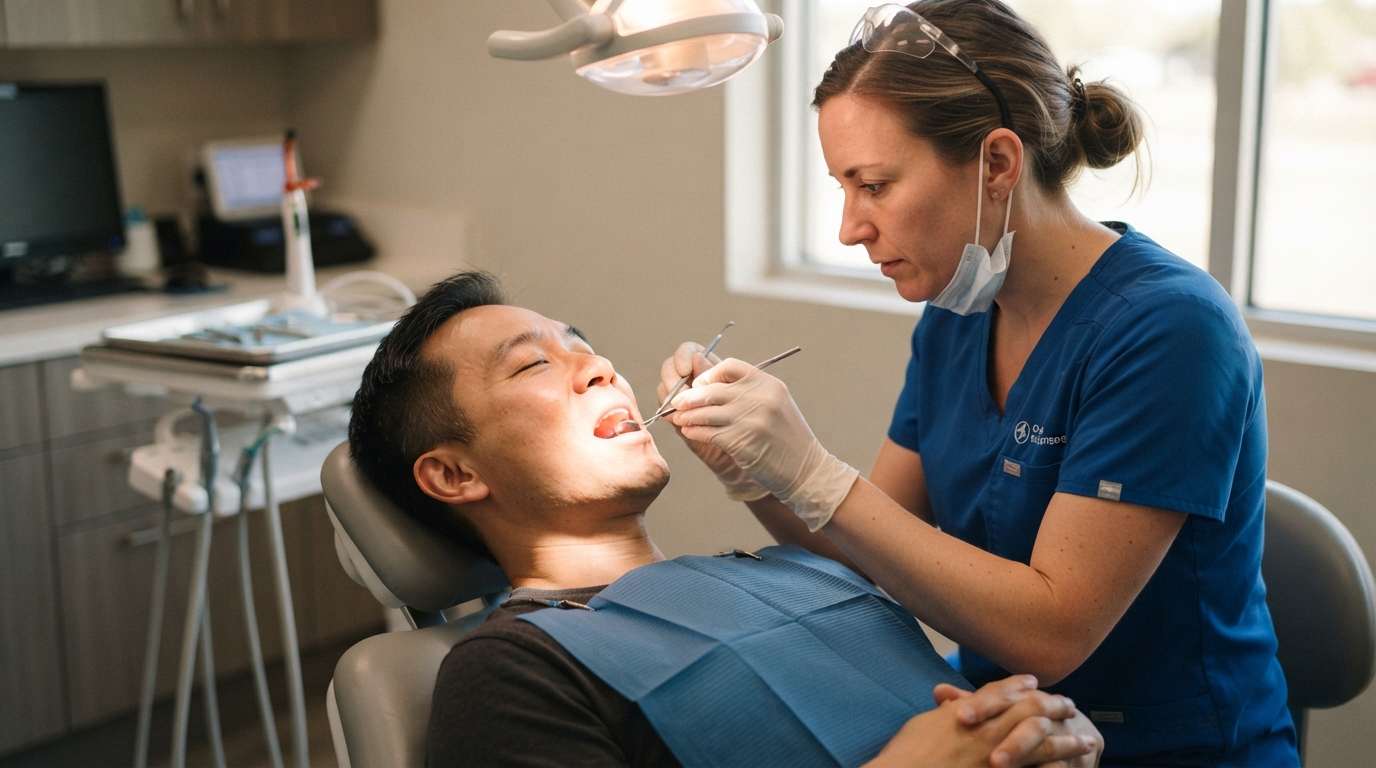
The gist:
• Persistent tooth pain, bleeding gums, or sudden sensitivity to hot and cold are common signals that a dental visit should not wait.
• Routine checkups are still recommended on a regular schedule even without symptoms, since many oral health problems develop without obvious pain.
• Local dental care for the Blaine, MN area is based out of Coon Rapids, MN.
Tooth pain that lingers for more than a day or two, gums that bleed during brushing, or a sudden jump in sensitivity to hot and cold drinks are the clearest signs that a visit to the Dentist should not be delayed. These symptoms often point to decay, infection, or gum disease that tends to worsen without professional evaluation. Catching these issues early typically means simpler, less invasive treatment than waiting until the problem becomes an emergency.
Many oral health problems develop quietly, which is why dental associations continue to recommend routine visits even in the absence of pain. The American Dental Association recommends a visit schedule based on each person’s risk, generally twice a year for healthy, low-risk patients, and every three to four months for those prone to gum disease, cavities, or other concerns. Residents in Blaine, MN who have gone longer than a year without a cleaning or exam fall into a category where a checkup is reasonably overdue regardless of symptoms.
Physical Warning Signs Worth Acting On
Certain symptoms carry more urgency than others and generally warrant scheduling an appointment within days rather than weeks.
• Persistent or throbbing tooth pain that does not resolve with over-the-counter pain relief, which can indicate an infection or abscess.
• Swollen, tender, or bleeding gums , especially when bleeding occurs during normal brushing or flossing.
• Loose or shifting teeth in an adult mouth, which can signal advancing gum disease.
• A cracked, chipped, or broken tooth , particularly after an injury or biting something hard.
• Chronic bad breath that does not improve with better oral hygiene, sometimes linked to underlying decay or gum infection.
• Jaw pain or clicking that may point toward teeth grinding or TMJ-related issues.
Any one of these on its own may not be an emergency, but ignoring them for weeks or months tends to allow smaller issues to become bigger, costlier ones.
Why Routine Visits Matter Even Without Symptoms
Pain is often a late-stage signal rather than an early one. During routine visits, hygienists remove plaque and tartar that daily brushing and flossing cannot eliminate, and catching problems like cavities and gum disease early typically results in simpler, less costly treatments. Oral cancer screening is another reason regular visits matter, since dentists often perform a visual screening during routine exams to check for signs of oral cancer and precancerous changes. For broader guidance on dental visit frequency and oral health maintenance, the CDC’s oral health resources outline general preventive care recommendations that apply across age groups.
Children and adults also face different risk profiles. Checkups every six months work well for most people, though children with excellent oral health can sometimes extend visits to eight months, while those with braces or cavity-prone teeth may need more frequent visits. Adults managing diabetes, dry mouth from medication, or a history of gum disease are often advised to schedule cleanings closer to every three to four months rather than the standard twice-yearly interval.
Comparing Visit Triggers: Routine vs. Urgent
| Situation | Typical Timeline | Why It Matters |
| Routine cleaning, no symptoms | Every 6 months (varies by risk) | Removes plaque buildup, catches early decay |
| Bleeding or swollen gums | Within 1-2 weeks | May indicate early gum disease |
| Persistent tooth pain | Within days | Often signals infection or deep decay |
| Broken tooth or dental trauma | Same day or next available | Prevents further damage or infection |
Business Info
Dental care for households in Blaine, MN, is provided by a practice based in Coon Rapids, MN, offering general and restorative treatments to patients throughout the surrounding area. Osage Dental Associates serves the region, and homeowners can Click Here to Find a Dentist for additional practice and service information.
Frequently Asked Questions
How do I know if tooth pain is an emergency? Pain that is severe, accompanied by facial swelling, fever, or a knocked-out or badly broken tooth generally warrants same-day attention rather than waiting for a routine appointment slot.
Is bleeding during brushing always a sign of gum disease? Not always, but regular dental visits are vital for detecting early signs of serious conditions such as cavities and gum disease, so persistent bleeding is worth having evaluated rather than dismissed.
How often should children in Blaine, MN see a dentist? Children should have their first dental visit by age one, then generally every six months through childhood, with adjustments based on individual risk factors identified by their provider.
Can skipping checkups actually increase long-term costs? Delaying care often allows minor issues to progress into problems requiring more extensive treatment, which is one reason routine, risk-based scheduling is generally recommended over waiting for symptoms to appear.