Quick take:
• Aluminium is widely used in UK construction for its strength-to-weight ratio, corrosion resistance, and structural reliability.
• Proper fabrication techniques directly influence on-site safety, compliance, and long-term building performance.
• Choosing a qualified fabricator is essential for meeting UK building regulations and health and safety standards.
Aluminium has become one of the most trusted structural materials in UK construction, valued for its durability and adaptability across a wide range of applications. When fabricated correctly, it contributes directly to safer buildings, reduced on-site risk, and longer-lasting structures.
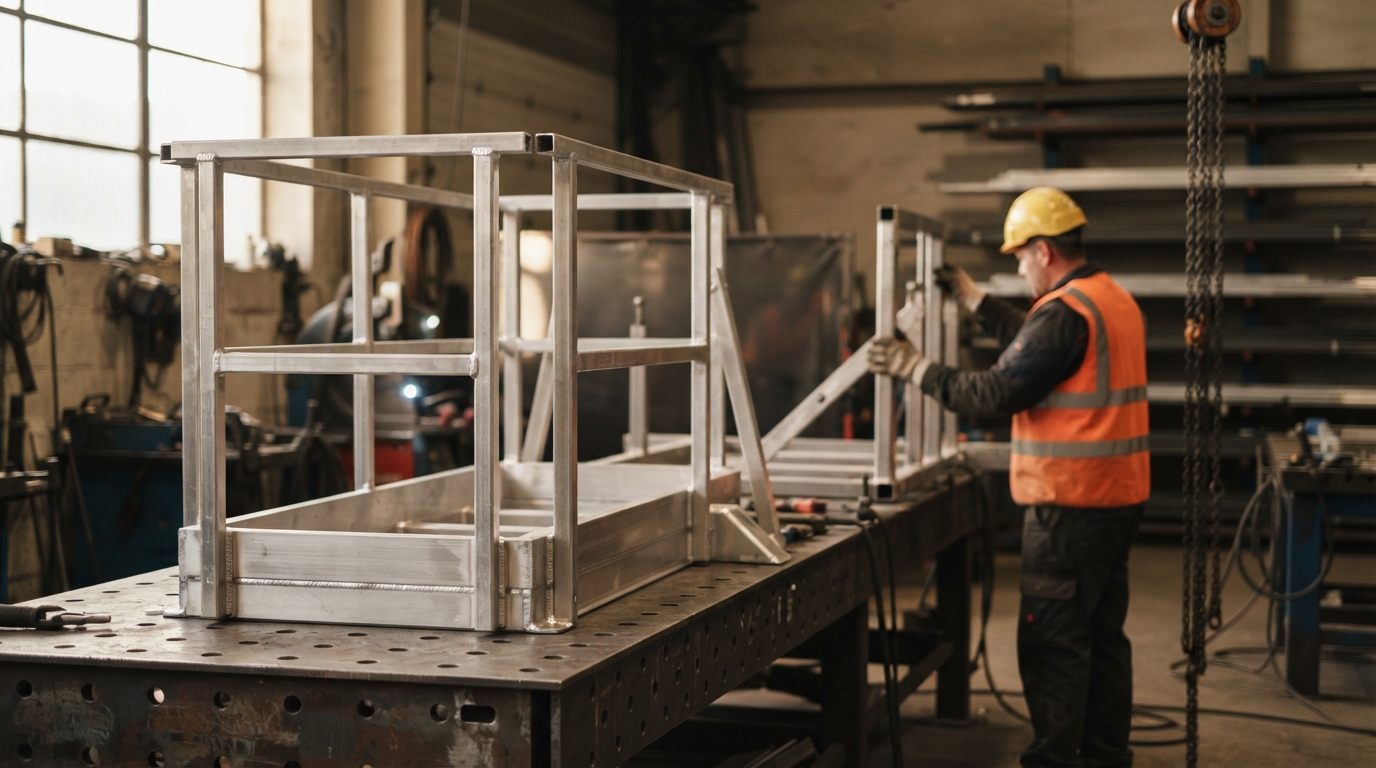
Aluminium fabrication encompasses the cutting, shaping, welding, and finishing of aluminium to produce structural and architectural components. From handrails and staircases to balustrades and access platforms, fabricated aluminium parts are load-bearing elements that must meet strict tolerances. Poor fabrication quality introduces structural weaknesses that can compromise the safety of an entire project.
Why Aluminium Is Well-Suited to Safe Construction
Aluminium offers a combination of properties that make it particularly appropriate for safety-critical construction applications.
Key advantages include:
• High strength-to-weight ratio, reducing load on supporting structures
• Natural corrosion resistance, minimising long-term degradation without heavy chemical treatment
• Non-combustibility at standard building temperatures, supporting fire safety strategies
• Recyclability, which aligns with circular economy goals in UK construction
The Health and Safety Executive sets clear expectations for structural materials used in construction environments. Components must be fit for purpose, correctly installed, and capable of withstanding anticipated loads. Aluminium, when fabricated to specification, meets these requirements consistently across both commercial and residential projects.
How Fabrication Quality Directly Affects On-Site Safety
The fabrication process itself is where safety is either built in or compromised. Precision matters at every stage.
• Cutting and forming: Inaccurate cuts create poor joint fits, which reduce structural integrity at connection points.
• Welding: Incorrect weld parameters on aluminium can produce weak joints that are not visible to the naked eye without testing.
• Surface finishing: Inadequate finishing can leave sharp edges or burrs that create injury risks during installation and use.
• Quality control: Fabricators should inspect components against engineering drawings before despatch to catch dimensional errors early.
Structural aluminium components used in public or commercial buildings in the UK must also comply with BS EN 1999 (Eurocode 9), the standard governing aluminium structures. Compliance with this standard is not optional where structural performance is a requirement.
| Fabrication Stage | Safety Risk if Poorly Executed | Recommended Control |
| Cutting and forming | Weak joints, misaligned connections | Precision CNC machining |
| Welding | Invisible structural failures | Certified welding procedures |
| Surface finishing | Sharp edges, corrosion initiation | Controlled deburring and anodising |
| Final inspection | Dimensional non-conformance | Drawing-matched QC checks |
Selecting a Fabricator That Supports Compliance
Not all fabrication workshops operate to the same standard. When evaluating a supplier for a construction project, consider the following:
1. Certification and accreditation: Look for fabricators with recognised quality management systems and relevant trade body memberships.
2. Material traceability: Reputable fabricators provide mill certificates confirming the alloy grade and temper of the aluminium used.
3. Drawing review capability: A competent fabricator will review engineering drawings before production and flag potential issues proactively.
4. Experience with structural applications: Handrails, mezzanine platforms, and access structures have different load requirements than purely decorative work.
5. Delivery and packaging standards: Components must arrive on site undamaged and clearly labelled to avoid installation errors.
Requesting references from previous construction projects and reviewing any relevant quality documentation before placing an order is a practical step that reduces risk.
Frequently Asked Questions
What aluminium alloy grades are most common in UK construction fabrication? Grades 6061 and 6082 are widely used for structural applications due to their strength, weldability, and corrosion resistance in external environments.
Does fabricated aluminium require special maintenance on construction projects? Aluminium requires minimal maintenance compared to steel. Anodised or powder-coated finishes extend service life further and reduce the need for repainting.
How does aluminium fabrication support CDM regulations? Under the Construction Design and Management Regulations 2015, designers and contractors must consider material safety across the full project lifecycle. Aluminium’s low weight reduces manual handling risks during installation.
Can aluminium fabricated components be used in fire-rated assemblies? Aluminium itself is non-combustible, but fire rating depends on the full assembly design. Always verify with the structural engineer and relevant fire safety guidance.
Find a Qualified Fabricator for Your Project
SAMS Fabrications is a UK-based metalwork specialist offering structural and architectural fabrication services across a broad range of construction applications. The business produces precision components built to client specifications and industry standards.
For construction projects where structural integrity and regulatory compliance are non-negotiable, contacting SAMS Fabrications to discuss project requirements is a practical starting point.