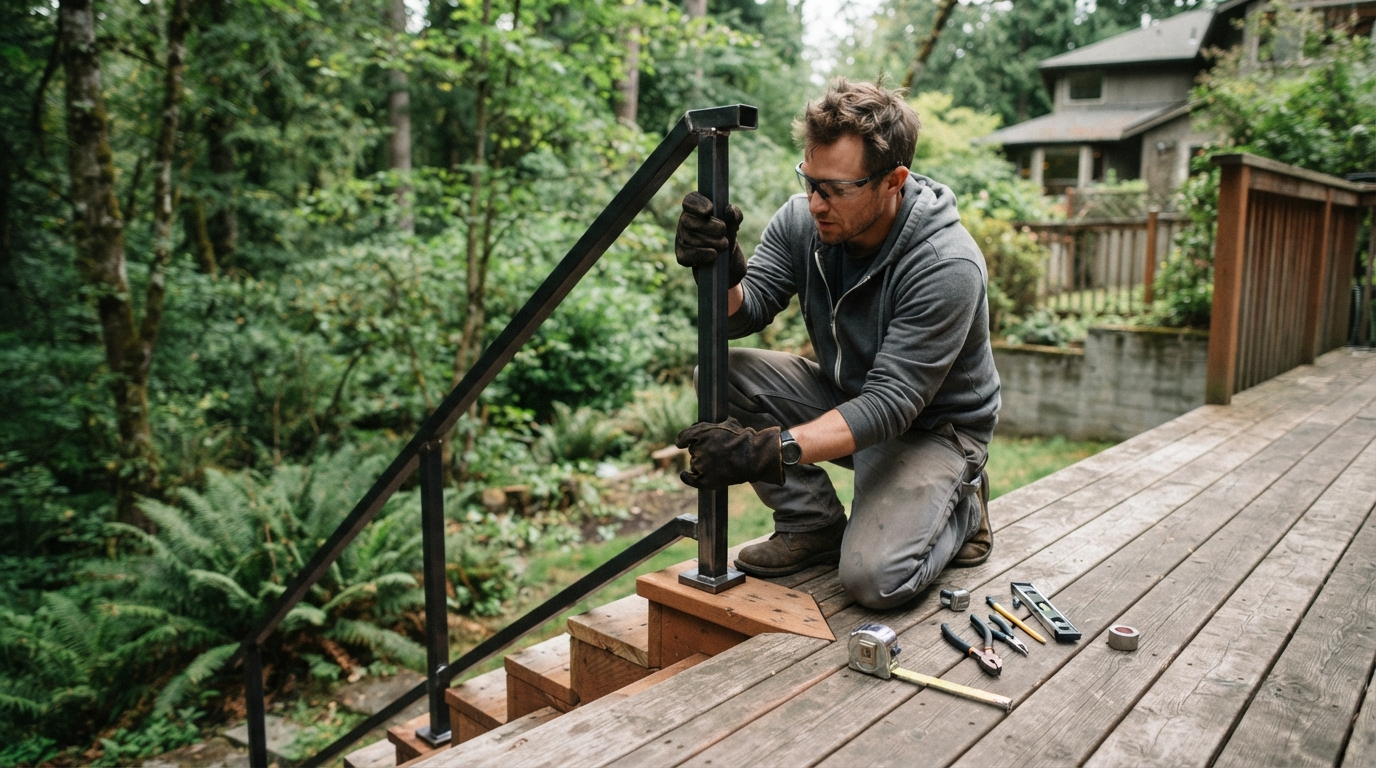
• Railing installation typically moves through measurement, material selection, fabrication, and on-site mounting, with most straightforward residential jobs completed in a single day.
• Washington sets a higher minimum guardrail height than many states, which affects material choices and inspection timing.
• Local welding and fabrication providers serve the University Place, WA and Gig Harbor, WA area for custom and replacement rail projects.
Anyone comparing quotes or planning a deck, porch, or stairway upgrade usually wants one thing first: a clear picture of what actually happens between the first phone call and the finished rail. Railing Installation generally follows a predictable sequence of measuring, designing, fabricating, and mounting, though the exact timeline depends on whether the project uses stock parts or a fully custom weld.
Readers in older homes near the water, where salt air speeds up corrosion, often ask different questions than someone building a brand-new deck. Knowing the stages in advance helps homeowners ask better questions during an estimate and avoid surprises once work begins.
How the Installation Process Typically Unfolds
Most residential rail projects move through four recognizable stages, whether the work involves a porch step or a full stairwell guard.
1. Site visit and measurement – A technician records the slope, rise, width, and mounting surface before any fabrication starts.
2. Material and design selection – Steel, aluminum, or stainless steel are chosen based on exposure, budget, and the look of the property.
3. Fabrication – Custom rails are welded to the exact dimensions of the stairs or deck rather than trimmed from a pre-made kit.
4. On-site mounting and inspection – Posts are anchored, welds are checked, and the rail is confirmed against local code before the job is closed out.
A straightforward residential installation often wraps up in about a day once fabrication is complete, though custom pieces add lead time because they are built to match the specific stairs or deck rather than ordered pre-made.
Custom Fabrication Versus Pre-Made Kits
Pre-made railing kits can work for simple, standard-width stairs, but they rarely fit older homes or irregular deck shapes without modification. Custom-welded rails take longer up front because each piece is measured and built to order, but they tend to fit tighter and require fewer field adjustments during mounting.
|
Factor |
Pre-Made Kit |
Custom Fabrication |
|
Lead time |
Shorter |
Longer, built to order |
|
Fit on irregular stairs |
Limited |
Built to exact measurements |
|
Material options |
Often limited |
Steel, aluminum, stainless steel |
|
Typical use case |
Standard, simple runs |
Custom homes, multifamily, unusual angles |
Why Height and Code Compliance Matter in Washington
Guardrail height is not a matter of preference once a deck, porch, or landing sits above a certain elevation. Under the International Residential Code, most states set a 36-inch minimum guard height, but Washington requires a minimum of 42 inches for residential decks, six inches taller than the baseline figure used elsewhere. Stair guards have their own range, generally required to be at least 34 inches measured from the line connecting the stair nosings.
Multifamily and commercial properties face stricter rules than single-family homes, with higher load ratings and more frequent inspections on shared stairwells and balconies. Property managers and HOAs in the Gig Harbor, WA area working on shared structures should confirm current height and load requirements with their local building department before finalizing a design, since amended local codes can differ from the state minimum.
Choosing Materials for Coastal and Marine Conditions
Homes near Puget Sound face faster corrosion than inland properties because of salt-laden air and higher humidity. Material choice affects both appearance and how often a rail needs maintenance over time.
• Steel offers strength and a traditional look but needs a protective coating to resist rust near the water.
• Aluminum resists corrosion well and requires less upkeep, making it a common choice for coastal decks.
• Stainless steel holds up to salt exposure with minimal maintenance, though it typically costs more upfront.
Based in University Place, WA, a fabrication and welding provider in the area extends railing services to surrounding communities, including Gig Harbor, WA, where coastal exposure often factors into material recommendations.
Frequently Asked Questions
How long does a typical railing installation take? A standard residential job often takes about one day once materials are ready, though custom-fabricated rails require additional lead time before installation begins.
Does a low deck still need a railing? Under the IRC, a guard is generally required once a deck, porch, or landing surface sits more than 30 inches above grade, measured within a short horizontal distance of the edge.
What is the difference between a handrail and a guardrail? A guardrail is the barrier that prevents falls along an open edge, while a handrail is the graspable rail on stairs, typically mounted between 34 and 38 inches above the stair nosing.
Can an existing railing be repaired instead of replaced? Loose posts, cracked welds, and rusted sections can often be repaired to restore safety without the cost of a full rebuild, depending on the extent of the damage.
Final Thoughts and Next Steps
Understanding the stages of measurement, fabrication, and mounting makes it easier to evaluate quotes and set realistic timelines for a deck, porch, or stairway project. Current availability details for Understand Professional Railing Installation are published for the local service area.